


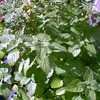
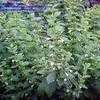
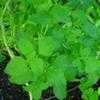

Lemon balm (Melissa officinalis) is a bushy, lemon-scented perennial herb native to southern Europe and the Mediterranean. Its bright green, heart-shaped leaves release a sweet citrus fragrance when brushed, and its small white flowers are a magnet for bees—hence the genus name Melissa (Greek for "honeybee").
Clump-forming perennial 60–90 cm tall. Leaves are opposite, ovate, 3–8 cm long, toothed, bright green, with a strong lemon scent. Flowers are tiny, white to pale yellow, in axillary whorls, blooming June–August. Spreads by rhizomes and self-seeding; can be aggressive in moist, rich soil.
| Family: | Lamiaceae (lay-mee-AY-see-ee) |
| Genus: | Melissa (mel-ISS-a) |
| Species: | officinalis (oh-fiss-ih-NAH-liss) |
Culinary: Fresh leaves for tea, salads, fruit dishes, desserts, cocktails. Medicinal: Traditional calmative, antiviral, digestive aid. Ornamental: Herb gardens, cottage gardens. 'Aurea' (golden foliage) and 'Variegata' are decorative cultivars.
Deadhead to prevent excessive self-seeding. Divide clumps every 2–3 years. Plant in containers or with root barriers to control spread.
Bloodroot (Sanguinaria canadensis): Spring Ephemeral with Red Sap
Lovage (Levisticum officinale): Towering Celery-Flavored Herb
Sweet Fern (Comptonia peregrina): Native Nitrogen-Fixer with Fern-Like Foliage
Chervil (Anthriscus cerefolium): Delicate Anise-Flavored Herb for Spring
Fenugreek (Trigonella foenum-graecum): Ancient Spice and Medicinal Legume
Goldenseal (Hydrastis canadensis): Endangered Native Medicinal Herb of Eastern Forests
Caraway (Carum carvi): Biennial Spice and Medicinal Seed
Common Myrtle (Myrtus communis): Fragrant, Evergreen Mediterranean Shrub for Topiary and Hedges
Anise (Pimpinella anisum): Sweet, Licorice-Flavored Annual for Seeds and Leaves
Licorice (Glycyrrhiza glabra): The Sweet Root of Herbal Medicine and Confectionery
Dorstenia bahiensis: Unusual Tropical Fig Relative with Shield-Shaped Flowers
Catstongue (Priva lappulacea): Tropical Groundcover with Sticky Seeds
Sesame (Sesamum indicum): Ancient Oilseed Crop for Seeds and Oil
Copyright © www.100flowers.win Botanic Garden All Rights Reserved