


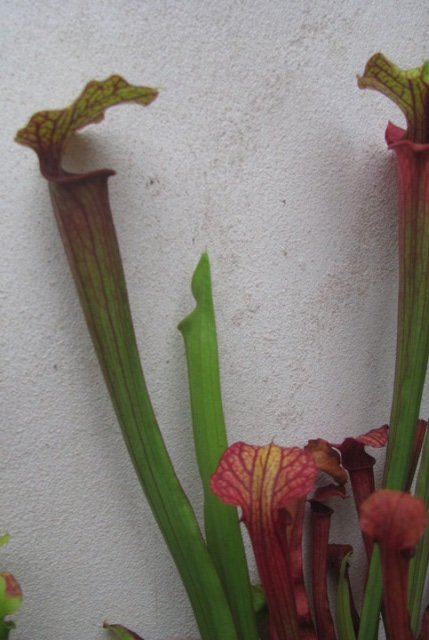
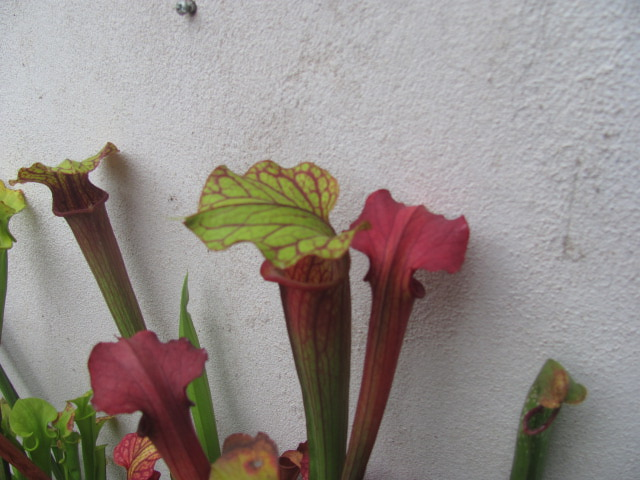
Your plant shows traits of multiple species, suggesting a complex hybrid. Without known parentage (e.g., open-pollinated seedling), exact ID is impossible.
Compare your photos against the extensive library at cpphotofinder.com. Look for matches in pitcher shape, coloration, and lid structure.
Lemon Black Spots and Bug‑Bored Tangerines: Extension Help Needed
Best Soil for Sarracenia purpurea, leucophylla, rubra: Peat/Perlite/Sand, Rinse Peat Well
Sarracenia × catesbaei Height and Self-Pollination Facts
Identifying Sarracenia rubra Subspecies & Drosera—Seedling Sun Transition
Identifying Sarracenia Rubra Subspecies and Managing Brown Patches
Overwintering Sarracenia Indoors vs. Outdoors: Dealing with Wind
Sarracenia Density, Pot Size, Winter Water Levels, and Rhizome Division
Regenerating Sarracenia from Rhizome Sections Without Crowns
Winter Light Requirements for Dormant Sarracenia in Unheated Storage
Transitioning Sarracenia Outdoors for Winter Dormancy
Easiest Sarracenia for New England (RI) Growing Conditions
Cleaning Sarracenia Rhizomes: Fungicide Use and Avoiding Excessive Peeling
Breaking Dormancy in Sarracenia purpurea with Light Cycle Adjustment
Copyright © www.100flowers.win Botanic Garden All Rights Reserved