



| Family: | Rutaceae (roo-TAY-see-ee) (Info) |
| Genus: | Fortunella (for-tun-NEL-uh) (Info) |
| Species: | crassifolia (krass-ih-FOH-lee-uh) (Info) |
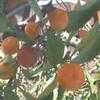
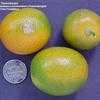
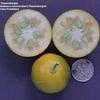
The Meiwa Kumquat (Fortunella crassifolia), also called **Sweet Kumquat** or **Sweet Kinkan**, is the **premier kumquat for fresh eating**. Unlike the common 'Nagami' (tart, acidic), 'Meiwa' has **sweet, edible rind and only mildly tart flesh**—the whole fruit (rind, flesh, seeds) is eaten together for a balanced, sweet-tart citrus burst. Native to China, introduced to Japan (Meiwa era, 1764–72), then to the West.
The fruit is **round to slightly oval, 1–1.25 inches, bright orange**, with a **thin, smooth, sweet, aromatic rind** and **juicy, mildly acidic, seedless (or few seeds) flesh**. Ripens **November–January** (winter), holding well on the tree. The tree is a **compact, thornless, bushy evergreen**, 6–10 feet tall, with dense, glossy, dark green foliage and fragrant white flowers (spring/summer). It is **more cold-hardy than most citrus** (survives to 18–20°F / -7 to -6°C), making it viable in Zone 8b/9a with protection.
USDA Zones 9–10 (8b with protection). **Full sun; well-drained soil; regular water; citrus fertilizer.** Excellent in containers (ideal for patios, moved indoors in cold climates). Self-fertile. Uses: **fresh eating (whole), marmalade, candied, cocktails, preserves**. The sweet rind makes it uniquely versatile. A **delightful, ornamental, productive citrus** for small spaces and marginal zones—the kumquat connoisseur's choice.
Lemon Tree: The Classic Citrus for Fruit, Fragrance & Foliage
Chonta Palm (Juania australis): Rare Chilean Palm
European Hornbeam (Carpinus betulus): The Classic Hedge & Shade Tree
Plumeria pudica: The Everblooming, Evergreen Frangipani
Durian (Durio zibethinus): The King of Fruits—Love It or Hate It
Washingtonia × filibusta: The Hybrid Fan Palm for Marginal Climates
Copyright © www.100flowers.win Botanic Garden All Rights Reserved