



Webs on Venus Flytraps and Drosera: Spider Mite Identification and Treatment
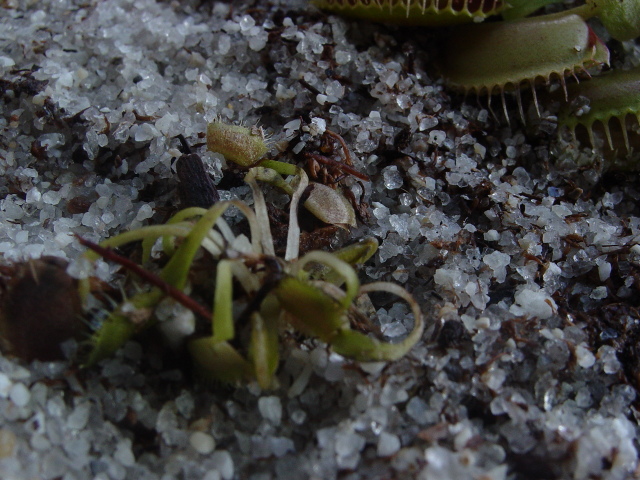
Webbing between trap teeth and on dying leaves, especially without visible insects, strongly suggests spider mites—a common indoor pest. Treatment Protocol Spray with a permethrin-based pesticide (effective against mit

Caring for New Venus Flytraps Received in November (Orange County, CA)
Receiving Venus flytraps in late fall (Zone 10a) creates a dilemma: theyre likely not acclimated to seasons and may not have energy for dormancy. Recommended Strategy Keep indoors under strong lights: 12+ hours of 12,0
Venus Flytrap Dormancy in Boston: Skip the Fridge, Use a Sunny Window
A Venus flytrap brought indoors before experiencing frost in Boston (Zone 6) should not be refrigerated. It hasnt received the natural cues (frost, shortening days) to enter dormancy properly. Correct Winter Care Keep
Sarracenia purpurea Indoor Lighting: Understanding Red Coloration and Leaf Shape
A Sarracenia purpurea kept in poor light can be grown indoors over winter with strong artificial lighting (four 23W compact fluorescents with reflectors). This setup works for temporary winter care, but outdoor growing i
Soil Mix for Nepenthes rajah in a Highland Terrarium: Drainage Is Critical
A proposed mix for N. rajah (perlite base, charcoal, sphagnum barrier, coconut fiber/bark mix, top-dressed sphagnum) is workable but requires careful water management in a terrarium. Simpler, Safer Approach Pot the plan
Nepenthes eymae Care: Acclimating from Highland to Intermediate Conditions
Nepenthes eymae is closely related to N. maxima and shares its adaptability. At our nursery, all Nepenthes are grown in highland conditions (cool nights, warm days, high humidity). Transitioning to Your Setup Your plant
Propagating Young Cephalotus: Why Patience Is Essential
Its tempting to propagate a new Cephalotus immediately, but juvenile plants (with pitchers only ~1 cm) are not suitable for leaf cuttings. Why Wait? Hormonal differences: Juvenile tissue has different hormone activity,
Starting a Carnivorous Plant Terrarium? Read This First
A 10-gallon aquarium terrarium for carnivorous plants is a common beginner project, but its fraught with pitfalls. Heres how to avoid the most common mistakes. Why We Discourage Terrariums Like saltwater aquariums, terr
Is Organocide Safe for Carnivorous Plants? An Expert Assessment
Organocide (containing sesame oil, edible fish oil, and lecithin) is marketed as a natural insecticide/fungicide, but its safety for carnivorous plants is questionable. Why Oils Are Risky Oils coat leaves and roots, hin
Carnivorous Plant Terrariums: Why Simpler Is Usually Better
While terrariums seem appealing, they often complicate carnivorous plant care unnecessarily. Most species adapt well to lower humidity and thrive on sunny windowsills without elaborate enclosures. The Problem with Terra
Best Carnivorous Plants for a Classroom in Zone 4 (Madison, WI)
Choosing a carnivorous plant for a second-grade classroom in a cold climate (Zone 4) requires selecting tropical species that dont need winter dormancy and can thrive on a sunny windowsill. Why Tropical Species? Tempera
Growing Venus Flytraps in Tampa, Florida (Zone 9): Dormancy Strategies
Cultivating Venus flytraps (VFTs) in warm climates like Tampa (USDA Zone 9) presents unique challenges. While these plants are native to the Carolinas, they can thrive in Florida with the right approach. Refrigerator Do
Understanding Pinguicula moranensis Dormancy: Watering and Care
Pinguicula moranensis, a Mexican butterwort, has a unique dormancy pattern that often confuses growers. Unlike temperate plants that require a strict cold dormancy, this species responds to environmental cues. Let the P
Dealing with Mold on Cephalotus: Effective Treatment Options
Finding mold on your Cephalotus (also known as the Albany pitcher plant) can be alarming, especially when its growing in pure sphagnum moss. The good news is that mold is a common issue in the humid conditions these plan
California Carnivorous Plant Selection: Easiest to Hardest by Region
A California grower asks for most effective/efficient CP for production, easiest/hardest maintenance by region. Regional Breakdown Venus Flytraps: Easy outdoor containers most areas (except hottest deserts) Cobra Plant
Winter Shipping of Lowland Nepenthes to Portland: Timing and Packaging
A Portland buyer asks how late lowland Nepenthes can be safely shipped and special cold-protection packaging. Shipping Policy Ship year-round, weather-watching Avoid freezing weather windows Oversized boxes + packing p
Greenhouse Ant Control and Heating for Nepenthes Collection
An 8×10 greenhouse with Nepenthes and tropical Drosera has sugar ant infestation. Asks safe insecticide and best heating method. Ant Control Boric acid baits (liquid or traps) — safe for plants Sugar ants = bait works
Nepenthes Root Rot Recovery: Superthrive and Humidity Boost
A growers few-months-old Nepenthes stopped growing, leaves drying. Repotted to sphagnum/perlite, found minimal roots, very wet soil. Diagnoses root rot. Recovery Protocol High perlite in sphagnum for drainage Superthri
Cephalotus Root Rot in Milk Jug Terrarium: Emergency Repotting
A growers 3-week-old Cephalotus in milk jug terrarium has sulfurous soil odor. Flushing helped temporarily. Asks about bacterial problem and long-term damage. Root Cause: Poor Drainage Milk jug = no drainage Sulfur sme
Terrarium Cooling for Ultra-Highland Nepenthes and Pygmy Sundew Care Check
A grower asks about cooling ultra-highland N. hamata terrarium and confirms pygmy sundew/D. capensis water levels. Cooling Solution Ultrasonic fogger (frog tank type) — cools via evaporation Pet stores carry these Wa
Copyright © www.100flowers.win Botanic Garden All Rights Reserved