


Multiflora rose (Rosa multiflora) was introduced from Asia in 1866 as rootstock and later promoted as a "living fence" for livestock. It forms impenetrable, thorny thickets 5–10 feet tall, displacing native vegetation across a wide range of soils and conditions.
Spray foliage with glyphosate (Roundup®) or triclopyr (Brush-B-Gon®) during active growth. Follow up with repeated treatments. Mechanical removal alone rarely succeeds due to massive root systems.
For detailed guidance, see the Iowa State Extension publication PM863.
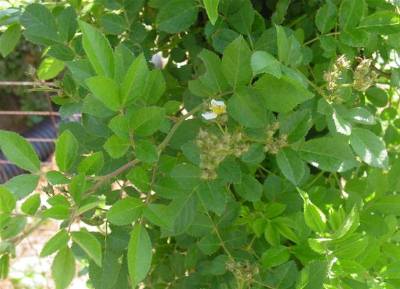
Don't plant it. If you have it, treat it aggressively—you'll regret ignoring it.
Identifying an Unknown Rose in a New Home: Use the House Age to Narrow Cultivar
Confirming Rose of Sharon (Hibiscus syriacus)
Millet in the Yard: Birdseed Volunteer
Spigelia (Indian Pink): Native Woodland Wildflower
Selaginella: The Charming Club Moss for Shady Groundcover
Identifying a Mystery Pear Variety from Fruit and Seed
Finding a Replacement for Terosa Organic Rose Fertilizer
Starting Rose Seeds: Warmth, Not Fridge, for Germination
Diagnosing Abnormal Rose Leaves: Light Green, Narrow, Shriveled Clusters
Pink Knockout: Spidery Leaves, Weak Blooms = Possible Rose Rosette Disease
Copyright © www.100flowers.win Botanic Garden All Rights Reserved