


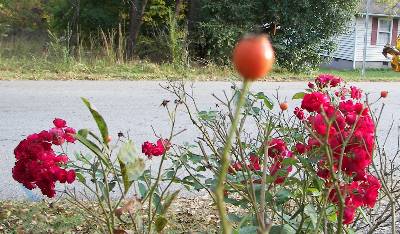
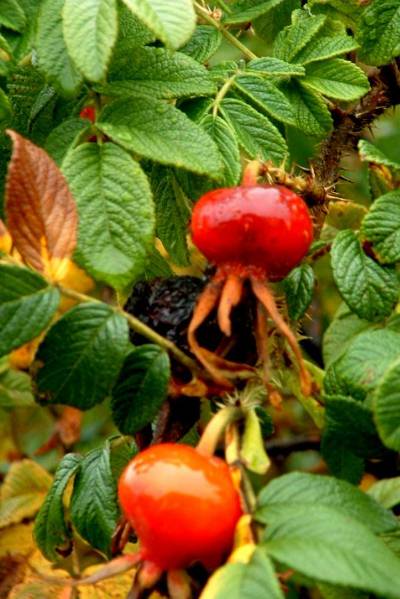
Those orange-red, marble-sized balls are rose hips—the seed pods that form after pollination. They're rich in vitamin C and traditionally used for tea, jelly, and syrup. Most gardeners leave them for fall and winter interest; birds eat them later in the season.
If you dislike the look, simply snip the stems 12 inches below the hips and hang the cuttings from a tree branch as a natural bird feeder.
Finding 'Pink Diamond' Rose: 1941 Variety Likely Lost—Try Cuttings
Brown, Soft Rose Hips in Shade: A Sign of Insufficient Sunlight
Dog Rose Hips: From Wartime Vitamin C to Backyard Jelly
Rosy Cooler: Rose Petal Drink and Rose Hips Benefits
Identifying and Managing Rose Rosette Disease
Rose Sawfly Larvae: Identification and Control
Hibiscus Identification & Care: Tropical, Hardy & Confederate Rose
Identifying an Unknown Rose in a New Home: Use the House Age to Narrow Cultivar
Confirming Rose of Sharon (Hibiscus syriacus)
Fall Planting: Rose Hips for Autumn Beauty
Millet in the Yard: Birdseed Volunteer
Spigelia (Indian Pink): Native Woodland Wildflower
Copyright © www.100flowers.win Botanic Garden All Rights Reserved