


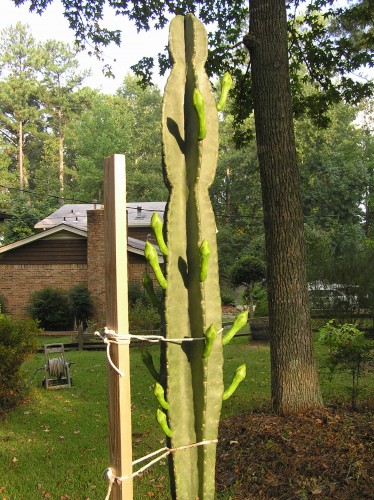
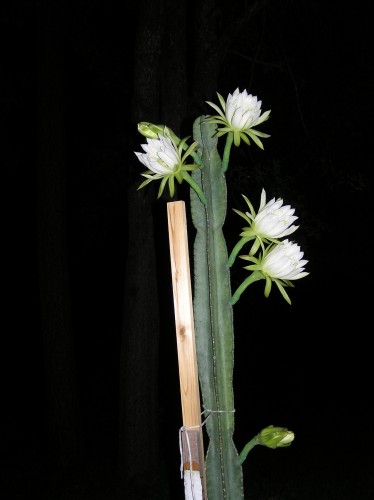
That towering, night-blooming cactus you've nurtured for 20 years—likely a Cereus peruvianus or similar species—can absolutely be propagated from cuttings. These dramatic plants, pollinated by moths and bats, produce huge, fragrant white flowers that open at dusk and fade by morning. If yours has outgrown its indoor space, taking cuttings is a great way to preserve its legacy while keeping the parent plant manageable.
Select a healthy stem segment 12–18 inches long. Use a clean, sharp knife to make a clean cut at a joint. Let the cutting callus over in a dry, shaded spot for 1–2 weeks—this step is critical to prevent rot. Once the cut end is firm and dry, plant it 2–3 inches deep in a well-draining cactus mix. Water sparingly until roots establish, which can take several weeks to a few months. Provide bright, indirect light and warmth.
The parent plant will often branch at the cut point, becoming fuller. Your new plant will be genetically identical and should bloom once mature.
Night Jasmine and Gardenia Pests: Neem and Bt
Finding and Growing Night-Blooming Cereus
Managing Night-Blooming Jasmine Allergies: Neighbor Solutions
Night-Blooming Cereus Bud Drop: Water Timing Critical
Night-Blooming Cereus (Epiphyllum) Overwatering and Yellowing Leaves
White Fuzzy Stuff on Night-Blooming Jasmine? It's Scale or Mealybugs—Treat with Oil or Soap
Night-Feeding Caterpillars and Slugs Devouring Bougainvillea and Jasmine
Costa Rican Night Blooming Cactus (Hylocereus costaricensis)
Container Bougainvillea Bloom Failure: Pot Size and Moisture Management
Why Cultivated Azaleas Bloom Heavily But Set No Seed
Jade Plant Blooms: A Sign of Excellent Care
Propagating Dinner-Plate Aralia (Polyscias): Pruning and Cuttings
Copyright © www.100flowers.win Botanic Garden All Rights Reserved