


The urn-shaped structure attached to a crape myrtle branch is the cocoon of a Polyphemus moth (Antheraea polyphemus), a member of the giant silkworm moth family (Saturniidae). UGA entomologist Lisa Ames notes that Polyphemus moths often attach their cocoons to branches in the open, while the related Luna moth typically spins its cocoon in leaf litter. The opening at the top indicates the adult moth has already emerged.
Enjoy the sight; it's a sign of a healthy ecosystem.
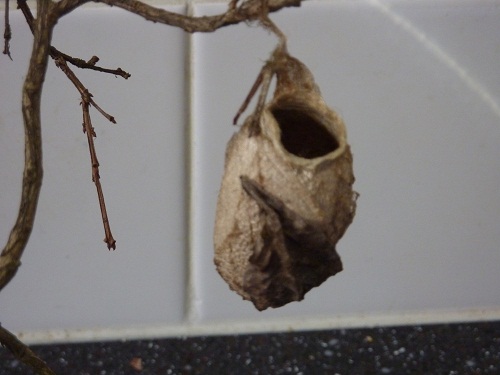
Polyphemus moth cocoon on crape myrtle
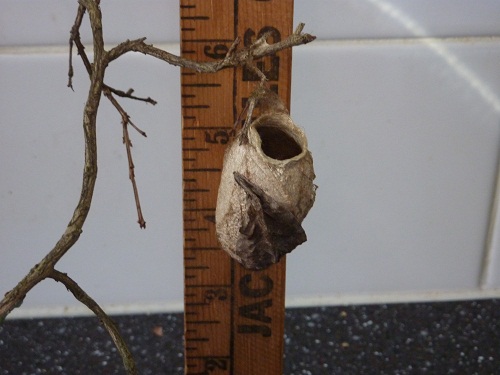
Cocoon detail showing emergence hole
White Cocoon on Plant: Scale Insect, Not a Cocoon
Large Green Caterpillar on Shed: Luna Moth Larva
Moths in Lawn: Adults Aren't the Problem—Larvae Are
Palm White Spots and Yard Moth Infestation
Phalaenopsis (Moth Orchid): Complete Care & Reblooming Guide
Gypsy Moth Egg Mass Control: Volck Oil Timing and NJ Program
Where Do Caterpillars Go to Pupate? Understanding Chrysalis and Cocoon Sites
Pantry Moths in the Kitchen: Identification, Trapping, and Elimination
Pandorus Sphinx Moth Caterpillar: A Striking Garden Visitor
Hickory Horned Devil: The Harmless Giant Caterpillar of the Regal Moth
Eliminating Indian Meal Moths from Pantry and Garage
Rustic Sphinx Caterpillar Parasitized by Braconid Wasps: Biological Control in Action
Copyright © www.100flowers.win Botanic Garden All Rights Reserved