


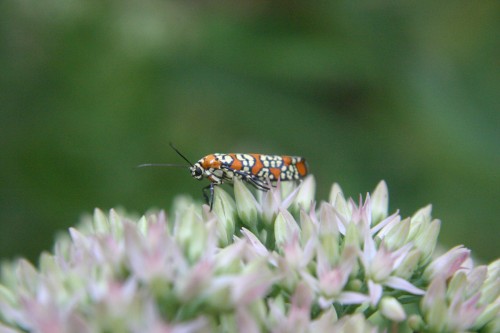
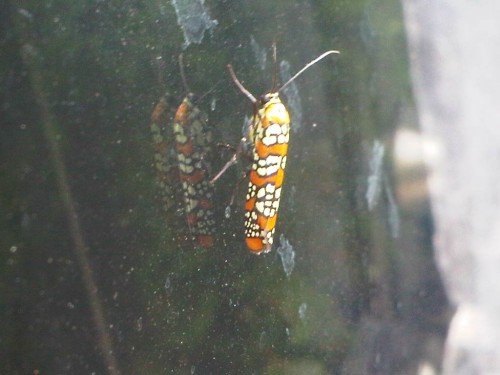
The ailanthus webworm moth (Atteva aurea) catches attention with its distinctive pattern—orange wings marked with white spots ringed in black, resembling an elongated ladybug. Despite its showy appearance, it's a common visitor to fall flowers.
The caterpillars feed exclusively on tree-of-heaven (Ailanthus altissima), an aggressive invasive tree. This makes the moth a rare example of a native insect utilizing an exotic host. The moths don't damage the tree significantly but don't control it either.
Adults are frequent nectar visitors on late-season flowers, particularly sedums. They contribute to pollination while their caterpillars utilize an invasive plant—a net ecological benefit in disturbed landscapes.
These moths are harmless to gardens, people, and structures. Enjoy their colorful presence on autumn blooms.
Finding Wild Elderberries: Join a Native Plant Rescue
North American Millipede: Harmless but Startlingly Large
Butterfly Identification Resources for Southeast Gardeners
Ailanthus Webworm Moth: Pollinator on an Invasive Host
Spigelia (Indian Pink): Native Woodland Wildflower
Golden Larch vs. Common Larch: Clearing Up the Confusion
Society Garlic: Seed Collection and Deer Resistance
Lanceleaf Greenbriar: Thornless Vine with Edible Shoots
Barred Owl: The "Who Cooks for You?" Hunter
Bloody Dock (Rumex sanguineus): Ornamental or Invasive?
Creasy Greens: The Spring Tonic Wild Cress
Turtlehead (Chelone lyonii): Native Perennial for Damp Shade
Copyright © www.100flowers.win Botanic Garden All Rights Reserved