


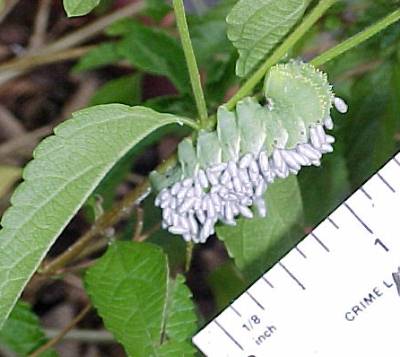
The white cocoons on the caterpillar are braconid wasp pupae. Wasps lay eggs on the caterpillar; larvae consume it internally, then spin cocoons. They overwinter and emerge in spring to parasitize more caterpillars. This natural control benefits your garden—leave them alone.
Phalaenopsis Rebloom Strategy: Old Spike vs. New Spike
Phalaenopsis Total Leaf Loss: Dead Plant, Plus Bonsai and Money Tree Issues
Panicle Hydrangea 'White Moth'
Polyphemus Moth Cocoon: Identification and Life Cycle
White Hummingbird Spotted in Georgia: Leucistic Ruby-Throat
Polyphemus Moth: Giant Silk Moth of Eastern Forests
Hummingbird Moth (Hemaris): The "Bird" That's Actually an Insect
Whitefly Invasion on Hibiscus: Neem Oil, Patience, and Cold Hope
Black Fuzzy Caterpillar with Red Rings: Giant Leopard Moth Larva
White Pine Blister Rust: Girdling Gall = Tree Doomed
White Stuff on Leaves: Mealybugs, Not Fungus
White Fuzz on Elephant Ear: Mealybugs or Fungus?
Ponytail Palm White Mold: Mildew or Scale?
Hornworm Caterpillars on Petunias: Identification, Damage, and Biological Control
Copyright © www.100flowers.win Botanic Garden All Rights Reserved