


Rose rosette disease, spread by tiny eriophyid mites, causes distinctive short red stems and excessive thorns. The mites overwinter in bark cracks and lay eggs in early spring. Horticultural oil sprays can suppress mite populations if applied before budbreak (February), at budbreak (March), and every two weeks thereafter.
However, if roses show no symptoms, treatment may be unnecessary. If symptoms appear, the infected plant must be removed—pruning does not control the disease.
Eryophyid Mite Description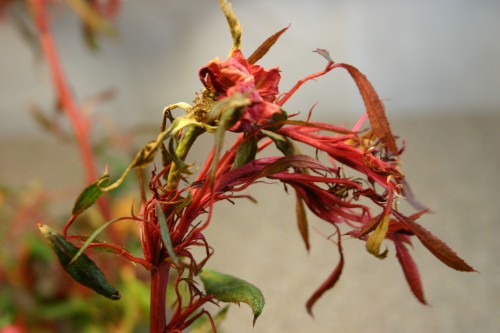
rose rosette disease
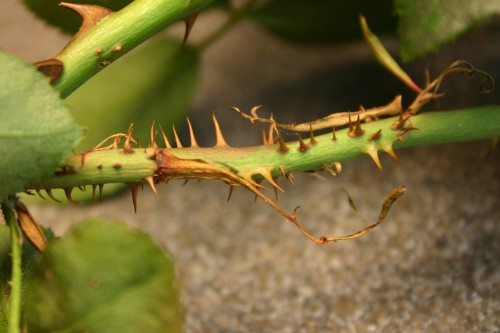
rose rosette thorniness
Eradicating Spider Mites on Mini Roses and Identifying Tomato Hornworms
Witches' Broom on Coreopsis Near Rose Rosette: Unlikely Same Virus—Lab Needed for ID
Is Volck Oil Spray Safe for Rosemary and Other Herbs?
Spider Mites on Indoor Rose: Systemic Treatment for Long-Term Control
Rose Rosette Disease: The Threat to Knockout and Drift Roses
Rose Rosette Disease: Identification, Management, and Replanting
Rose Rosette Disease: 80+ Roses Dying in Louisiana—Act Now
Black Spot on Roses: Management, Not Cure
Horticultural Oil on Arborvitae: Benefits, Risks, and Proper Application
Spider Mites on Indoor Citrus: Oil Sprays or Beneficials
Rose Thorn Disease: A Real Fungal Risk for Gardeners
Bird Mites in a Hanging Basket: Safe Treatment for Wrens and You
Plum Tree Disease Prevention: Spray Schedule for Home Orchards
Copyright © www.100flowers.win Botanic Garden All Rights Reserved