


Carrotwood, also called Cupania, Brush Deal, or Tuckeroo, is an Australian native that has become a serious invasive species in Florida and Hawaii. Cupaniopsis anacardioides (family Sapindaceae) was introduced as an ornamental street tree in the 1960s—its attractive form, evergreen foliage, and salt tolerance made it popular before its invasive nature was recognized.
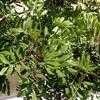
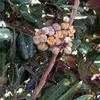
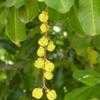
Carrotwood grows 30-40 feet tall with a dense, rounded crown. The leaves are pinnately compound, 6-10 inches long, with 4-10 leathery, glossy leaflets. The bark is gray, smooth, becoming fissured; the inner bark is orange (hence "Carrotwood"). Inconspicuous greenish flowers are followed by showy, yellow-orange capsules (¾ inch) that split open to reveal shiny black seeds with a yellow aril—attractive to birds, which disperse them widely.

| Family: | Sapindaceae (sap-in-DAY-see-ee) |
| Genus: | Cupaniopsis (ku-pan-ee-OP-sis) |
| Species: | anacardioides (an-a-kar-dee-OH-id-eez) |
Carrotwood invades coastal hammocks, mangroves, and disturbed sites in South and Central Florida, forming dense monocultures that displace native vegetation. It's salt-tolerant, shade-tolerant, and produces massive seed crops. It's a Category I invasive in Florida (prohibited); listed in Hawaii and other regions.
Removal is difficult due to resprouting. For similar evergreen shade in coastal zones, use native alternatives: Bursera simaruba (Gumbo Limbo), Coccoloba uvifera (Sea Grape), Conocarpus erectus (Buttonwood), Guaiacum sanctum (Lignum Vitae). In Australia, it's a valued native. A classic case of an ornamental introduction becoming an ecological nightmare.
Empress Tree (Paulownia tomentosa)
Madagascar Palm (Pachypodium lamerei)
Dawn Redwood (Metasequoia glyptostroboides)
European Hornbeam (Carpinus betulus): The Classic Hedge & Shade Tree
Plumeria pudica: The Everblooming, Evergreen Frangipani
Durian (Durio zibethinus): The King of Fruits—Love It or Hate It
Washingtonia × filibusta: The Hybrid Fan Palm for Marginal Climates
Copyright © www.100flowers.win Botanic Garden All Rights Reserved