


Red Mulberry is a native North American tree that produces delicious, blackberry-like fruits beloved by birds, mammals, and humans alike. Morus rubra (family Moraceae) ranges from the Great Lakes to the Gulf Coast, thriving in rich, moist woods and floodplains.
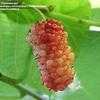
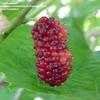
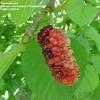
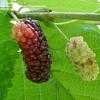
The fruits are aggregate drupes, 1-1.5 inches long, ripening from red to deep purple-black in early summer. They're sweet, juicy, and richly flavored—considered superior to the introduced White Mulberry (M. alba). The leaves are polymorphic (variable—lobed to entire), 3-7 inches, rough-textured above, softly hairy beneath. The tree grows 30-60 feet tall with a broad, rounded crown. The bark is orange-brown, fissured.
| Family: | Moraceae (mor-AY-see-ee) |
| Genus: | Morus (MOR-russ) |
| Species: | rubra (ROO-bruh) |
| Synonym: | Morus rubra var. rubra |
Red Mulberry is a wildlife powerhouse: over 50 bird species eat the fruits, plus raccoons, opossums, foxes, and squirrels. The foliage hosts numerous caterpillars. It's also a host for the Mourning Cloak butterfly. For humans, the fruits are excellent fresh, in pies, jams, wine, and dried. The wood is durable, used for fence posts and furniture.
It prefers rich, moist, well-drained soil and full sun to part shade. It's dioecious (male/female trees)—plant several for fruit. It hybridizes readily with invasive White Mulberry, threatening genetic purity. In cultivation, choose named female cultivars or seedlings from known Red Mulberry parents. It's hardy to zone 4. A superior native alternative to White Mulberry for edible landscaping and restoration.
Maidenhair Tree (Ginkgo biloba): The Living Fossil with Unique Fan-Shaped Leaves
Bottlebrush Tree (Callistemon rigidus): An Australian Native with Stiff, Red Brush-Like Flowers
Katsura Tree (Cercidiphyllum japonicum)
Red Mangrove (Rhizophora mangle): Coastal Guardian of the Tropics
Fern Tree (Filicium decipiens): Graceful Shade for Tropics
Copyright © www.100flowers.win Botanic Garden All Rights Reserved