


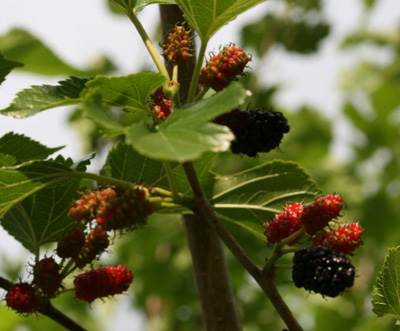
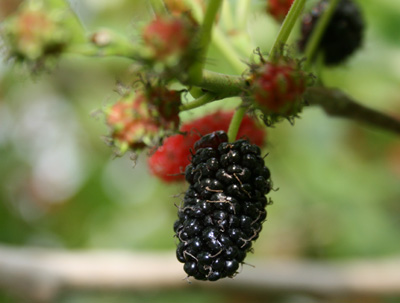
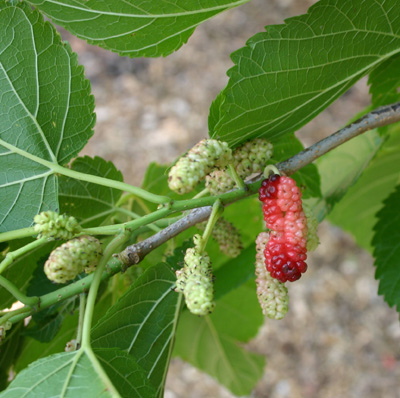
Before rooting a branch, check for seedlings under the parent tree—easier than cuttings. But consider: mulberries are messy. Birds eat fruit, then decorate your vehicles. Wild fruit is bland; cultivated varieties are sweeter (see Edible Landscaping catalog).
Take 6–8 inch semi-hardwood cuttings in summer. Use rooting hormone, keep humid. But seedlings transplant better.
If you want mulberries, buy a named cultivar. If you want wildlife, plant serviceberry or viburnum—less mess, more ornamental value.
Fruitless Mulberry Leaf Spot: Fall Cleanup Beats Late Spraying
Male Mulberry Vertical Cracks: Prune Deadwood, Time Cuts to Sap Slowdown
Weeping Mulberry Leaf Spots and Yellowing: Likely Minor, Check Roots
Fruitless Mulberry Stops Growing: Watering Too Light, Tree May Be Dying
Weeping Mulberry Decline: Scale and Webworms
Fruitless Mulberry Limb Failure: Internal Decay and Hazard Assessment
Saving a Borer-Infested Mulberry: Systemic and Trunk Spray Options
Fruitless Mulberry One-Sided Decline: Chemical Injury Suspected
Fruitless Mulberry Decline: Internal Decay After Pruning
Mulberry Tree with Borer Holes: Ambrosia Beetle Suspected
Black Blotches on Mulberry Trunk: Likely Lichens, Not Disease
Mulberry Partial Leaf Out: Fungus Check and Atomic Grow Catch-Up
Copyright © www.100flowers.win Botanic Garden All Rights Reserved