


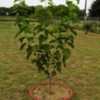
'Illinois Everbearing' Mulberry is a celebrated hybrid cultivar (likely Morus alba × M. rubra) that produces an exceptionally long harvest season of sweet, blackberry-like fruits. Selected in Illinois, this mulberry combines the best traits of its parent species: fruit quality, cold hardiness, and extended bearing.
Unlike standard mulberries that fruit for 2-3 weeks in early summer, 'Illinois Everbearing' produces successive crops from early summer through fall—often 2-3 months of continuous harvest. The fruits are 1-1.5 inches long, deep purple-black when ripe, sweet with a rich, complex flavor (less tart than wild red mulberry). They resemble elongated blackberries and are excellent fresh, in preserves, baked goods, and wine.
| Family: | Moraceae (mor-AY-see-ee) |
| Genus: | Morus (MOR-russ) |
| Cultivar: | Illinois Everbearing |
This deciduous tree grows rapidly to 30-40 feet tall and wide, with a rounded, spreading canopy. The leaves are polymorphic (variable shape—lobed to entire), 3-7 inches long, glossy green. It's very cold-hardy (zone 4/5), heat-tolerant, and adapts to a wide range of soils, including alkaline and clay. Full sun produces best fruit.
Mulberries are dioecious (male/female trees), but 'Illinois Everbearing' is self-fruitful (female, sets fruit without pollinator). The fruits drop when ripe—plant away from patios, driveways, and walkways to avoid staining. Birds love them (great for wildlife, messy for pavement). Prune in winter to control size. It's resistant to most pests and diseases. A top choice for edible landscaping and permaculture.
Joshua Tree (Yucca brevifolia): Mojave Desert Icon
Grass Tree (Xanthorrhoea nana): Dwarf Australian Grasstree
Tulip Poplar (Liriodendron tulipifera)
Camphor Tree (Cinnamomum camphora)
Silver Tree: The Shimmering Protea of South Africa
Neem Tree (Azadirachta indica): Miracle Tree of the Tropics
Orchid Tree (Bauhinia monandra): Butterfly Leaves and Pink Flowers
Brazilian Pepper Tree (Schinus terebinthifolius)
Sapphire Dragon Tree (Paulownia kawakamii): A Rare Taiwanese Tree with Violet Flowers
The Cocoa Tree (Theobroma cacao): From Tropical Forest to Chocolate Bar
Chaya (Cnidoscolus chayamansa): Nutritious Tree Spinach of the Maya
Tropical Almond (Terminalia catappa): Coastal Shade Tree with Edible Nuts
Red Mulberry (Morus rubra): Native Sweet Fruit for Wildlife and People
Gold Medallion Tree (Cassia leptophylla): Spectacular Summer Blooms
Copyright © www.100flowers.win Botanic Garden All Rights Reserved