


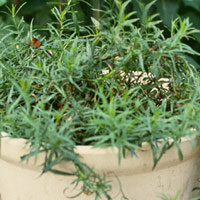
French tarragon is essential for many cooks—used in salads, sauces, chicken dishes, and to flavor oils and vinegars.
Be cautious when buying: French tarragon is often confused with Russian tarragon, a weedy plant with little culinary value. French tarragon is a hardy perennial propagated only from tip cuttings of new growth, root cuttings, or divisions. If you see tarragon seed for sale, it's likely the inferior Russian variety.
This herb thrives in full sun or partial shade with well-drained soil.
Purchase plants, or in early spring divide established plants from a friend's bed into two or three. New plants can also come from stem cuttings of new growth or root cuttings in spring or fall. Space plants 2–3 feet apart to allow spreading.
Prune to prevent flowering and keep height to 2 feet to avoid flopping. In central and northern states, mulch in late fall to protect roots over winter. Divide every 3–4 years to maintain vigor.
Leaves are best used fresh in early summer or frozen for later use. Drying is an option, but flavor degrades if dried too long. Pack in airtight containers once dry.
Iron's Essential Role in Plant Growth: A Science Project Guide
Beetles, Grubs & Ants in Saudi Garden: Safe Control Options
Thick White Fungus Around Ferns and Roses: Nuisance or Threat?
Growing Wisteria from Seed: A Complete Guide to Bonsai, Blooms, and Finding Free Plants
Caring for Established Blue Euphorbia: Watering Timing Matters
Plants Around a Chlorinated Pool: Salt Is the Real Enemy
Killing Thorny Pasture Weeds Without Harming Cattle or Grass
Yucca Plant Lost Leaves: Likely Needs Replacement
Do Aloe Plants Have Male/Female Sexes?
Sunlight vs. Artificial Light for Plant Growth
Native Prairie Wildflowers for a Sunny, Dry School Garden in New York
Aphids on Drosera filiformis: Safe Insecticide Resources
LED Grow Lights: Intense for Low-Light Plants, Good for Nepenthes Supplement
Copyright © www.100flowers.win Botanic Garden All Rights Reserved