


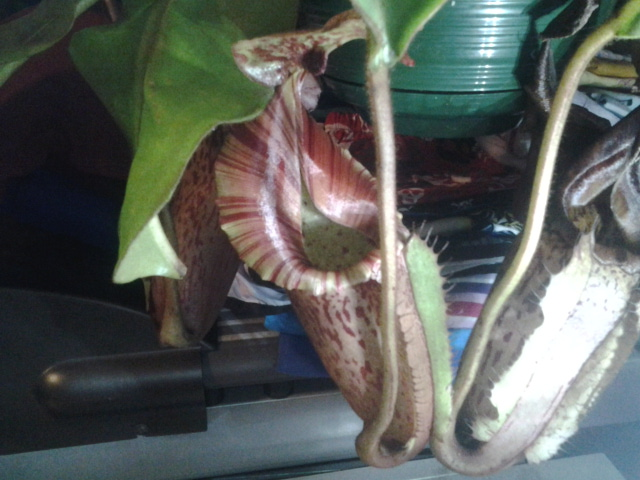
Definitely a hybrid. Exact ID tricky—same hybrid can vary wildly. Best guess: N. veitchii × maxima. N. veitchii almost certainly a parent; N. maxima likely the other. A beautiful specimen regardless.
One Flower Bed Keeps Killing Annuals: Diagnose Drainage and Fungal Issues
Winter Lighting for Highland Nepenthes in Wisconsin: Shop Lights Over SAD Lamps
Tacoma, WA Tap Water Unsuitable for Carnivorous Plants (156 ppm)
Can Carnivorous Plants Grow in Garden Soil?
Transplanting Baby Nepenthes: When and How to Separate Offsets
Carnivorous Plants for Extreme Heat: Yucatan, Mexico (33–43°C Days, 26–27°C Nights)
Growing Carnivorous Plants in Glendale, Arizona: Heat, Humidity, and Sources
First Carnivorous Plant Purchase: Healthy Specimens from Carnivorous Plant Nursery
Brocchinia reducta Reproduction: Seeds or Pups?
Nepenthes Pitcher Deformation: Fertilizer Suspect
White Spots on Nepenthes platychila: Scale or Thrips
Fertilizing Nepenthes: Foliar Feeding Works, Misting Doesn't Raise Humidity
Fertilizing Nepenthes: Maxsea Foliar Feed, Urea-Free Orchid Formula
Copyright © www.100flowers.win Botanic Garden All Rights Reserved