


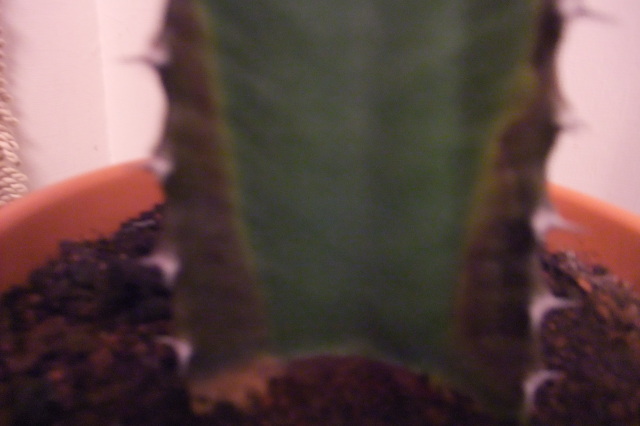
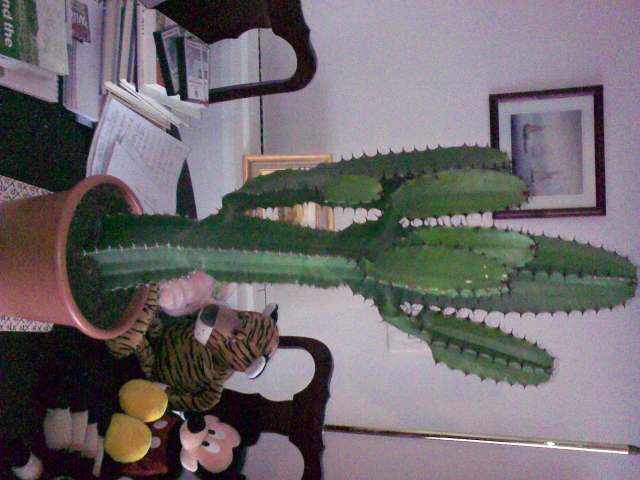
This "cowboy cactus" is actually Euphorbia ingens, a succulent. The sudden, soft browning at the base is not normal corking—it's active rot, likely from the combination of UK winter cold, darkness, and possible overwatering (even monthly watering can be too much in cool, low-light conditions). The dehumidifier helps, but standard compost retains too much moisture.
The owner successfully amputated, found healthy tissue 2 inches above rot, applied rooting powder, and is callousing the main stem—excellent work. One arm was set aside as insurance. The white latex confirmed Euphorbia identity. Soil was discarded, pot sterilized.
Fungus Gnats in Pothos: Identification and Control
Identifying a Tall, Hardy Houseplant: Yucca elephantipes (Spineless Yucca)
Avocado Plant Troubles: Seed Rot, Pests, and Watering
Identifying a Smelly Succulent: Sedum or Echeveria
Identifying the White Bird of Paradise (Strelitzia alba)
Cymbidium Leaf Drop & Bulb Death: Repot in Fresh Bark Mix
Nepenthes × ventrata Pitcher Failure: Soil and Light Fixes
Rooting a Large Cactus Cutting: The "Cowboy Cactus" Method
Saving a Corn Plant from Root Rot After Repotting
Diagnosing Brown Leaves on Dracaena sanderiana
Peace Lily Decline After Repotting: Root Rot Recovery
Mystery Plant in an Alaskan Greenhouse: Chaste Tree or Weed?
Copyright © www.100flowers.win Botanic Garden All Rights Reserved