


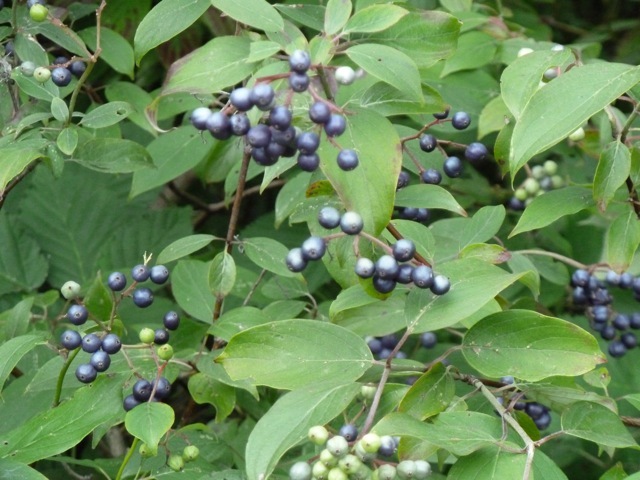
A gardener had bushes with tiny blue berries turning blue (were green). No crown on berry, so not blueberries. Dog eats them without issue.
P1000710.jpg
Likely a blue-fruited dogwood (Cornus sp.). Opposite, non-toothed leaves with veins following leaf edge and bluish fruits in panicles point to this. Common eastern species: stiff dogwood (C. foemina, leaves green below, southern US), narrowleaf dogwood (C. obliqua, leaves white below, northern US), silky dogwood (C. amomum, rounder leaves), roundleaf dogwood (C. rugosa, rounder leaves, purple-blotched twigs). Other possibilities: buckthorns (Rhamnus, usually toothed leaves, fruit not in long panicles), huckleberries (Gaylussacia/Vaccinium), blueberries (Vaccinium, veins don't follow leaf edge, berries have crown). Seed count distinguishes: dogwoods 1 seed, buckthorns 2-4, huckleberries ~10, blueberries tiny seeds. Huckleberries and blueberries edible; dogwoods and buckthorns not. Buckthorn juice irritates skin; dogwoods cause mild vomiting, probably not harmful to dog. If buckthorn, cover with netting.
White/Gray Leaves on Japanese Red Maple: Need Photo
Blue Princess Holly Scale: Horticultural Oil or Sevin, Plus Fertilizer
Powdery Mildew on Lilac: Identification and Treatment
Managing Severe Aphid Infestations on Butterfly Bush
Reviving an Old Floribunda Rose That Stopped Blooming: Pruning and Fertilizer Reset
Yellowing Lower Leaves on Knock Out Roses in South Texas
Diagnosing Yellowing Leaves and Defoliation in Roses: Iron Deficiency and Black Spot
Rose Slugworm (Sawfly Larvae) Damage: Skeletonized Leaves on Standard Roses
Rose Bush Losing Leaves After Transplant – Root Stress
Identifying a Volunteer Mulberry in Minnesota
To Prune or Not to Prune: Managing Aging Nepenthes Leaves and Pitchers
Copyright © www.100flowers.win Botanic Garden All Rights Reserved