


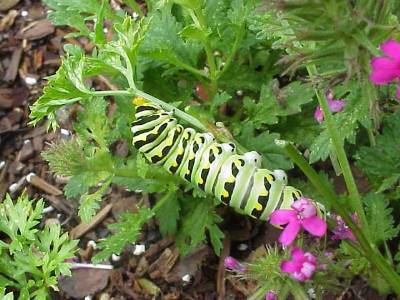
A gardener found numerous caterpillars devouring their parsley and asked for identification. The answer: they are the larvae of swallowtail butterflies, often called "parsley worms." The butterflies laid eggs in July; the tiny hatchlings went unnoticed until they grew large enough to consume visible foliage.
Unless the parsley crop is essential, the recommendation is to let the caterpillars feed. They will soon pupate and emerge as beautiful butterflies. Fresh parsley can be planted in fall for a new harvest after the caterpillars are gone. This is a classic example of sharing the garden with pollinators.
Quick Facts:
Enjoy the temporary guests—they'll reward you with pollination later!
Pickleworms in Squash: Identification, Lifecycle, and Control
Silverfish Control: Reduce Humidity and Target Hiding Places
Dogfennel Identification and Control in Pastures and Landscapes
Understanding Chipmunk Burrows and Humane Management
Mystery Squash from Compost: Hybrid Cucurbit Surprises
Growing Cotton in Georgia: Legal Restrictions Protect the Industry
Golden Digger Wasps: Beneficial Lawn Insects
Controlling Canada Geese on Urban Lakes
Managing Beaver Damage: Protection, Deterrence, and Removal
Kudzu Control: It Has Flowers (Grape Kool-Aid Scent), Spray in Fall or Spring
Heeling In Plants: The Best Way to Store Plants Before Transplanting
Copyright © www.100flowers.win Botanic Garden All Rights Reserved