


Q: I recently poured 150 gallons of water down a chipmunk's hole and it didn't fill up, nor did any water emerge elsewhere. I even checked under the house for leaks.
How deep do chipmunk holes go, and where do they put the excavated dirt?
A chipmunk burrow system can be surprisingly extensive. The main tunnel typically measures 2–3 inches in diameter and can stretch 20–30 feet in length. As you discovered, the entrance is often inconspicuous because chipmunks transport excavated soil in their cheek pouches and scatter it away from the hole, leaving no telltale mound.
The water you poured likely seeped into the surrounding soil through natural fissures along the tunnel's length rather than pooling inside.
Chipmunk populations naturally peak in May but decline sharply by winter due to predation from dogs, cats, owls, hawks, and vehicle traffic. Given this cycle, I rarely recommend control measures. By January, only a couple of chipmunks may remain from the dozen present the previous summer.
Overfilled bird feeders are the primary driver of chipmunk population surges. Remember that chipmunks are protected by state law—you are not supposed to trap, kill, or harass them.
My advice is to fill problematic holes with concrete or large gravel and allow nature to take its course. For legal details, see Georgia Law on Non-Game Wildlife and the UGA Chipmunk Control bulletin.
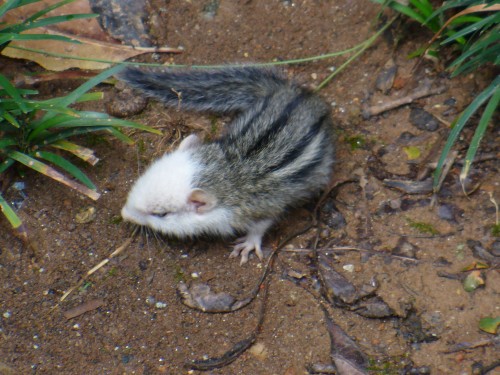
Partial albinism in a chipmunk
Chipmunks in Basement: Live Trap, Mint, Cats
Natural Control of Ticks and Mosquitoes in Shady Yards
Sugar Doesn’t Kill Weeds; Bees/Wasps Need Habitat Management
Spider Mite Control: Natural Solutions for Healthy Plants
Comprehensive Guide to Common Garden Pest Control
Canada Goose Control: Legal and Practical Options
Allegheny Mound Ants: Difficult to Control in NW Georgia
Beneficial Nematodes: Better for Greenhouses Than Gardens
Identifying and Removing Animals in the Attic
Protecting Fruit and Tomatoes from Squirrels
Argentine Ants in Kitchen: Identify, Bait, Seal—Don't Spray
Lubber Grasshopper (Georgia Thumper): Control Options for Large, Slow Pests
Copyright © www.100flowers.win Botanic Garden All Rights Reserved