


Beavers are increasingly common in suburban areas, where their dam-building and tree-cutting activities conflict with human landscapes. While they play vital ecological roles, their presence near homes requires thoughtful management to protect valuable trees and prevent flooding.
The most reliable tree protection is wrapping trunks with half-inch mesh hardware cloth, 36 inches high. Loosely encircle each trunk with two layers, securing ends so they can't unwrap. This prevents gnawing while allowing trunk expansion. Focus on high-value specimens—protecting every tree in a wooded lot is rarely practical.
For problematic dams, breaching combined with slotted drain pipes can encourage abandonment. Install several 4-inch diameter perforated pipes at the dam's base, perpendicular to its length. Beavers struggle to plug all pipe holes, and the dropping water level may prompt relocation—though they often build a new dam nearby.
When damage is severe, professional trapping may be necessary. Live traps (Havahart-style) allow release of non-target animals but cost more. Lethal traps are effective but risk catching otters and other wildlife. Any trapped beaver must be either euthanized by the trapper or relocated to private land with owner permission—release on public land is illegal.
Suburban beavers often bank-burrow rather than build dams, making detection harder. They're remarkably persistent: one homeowner reported beavers chewing through chicken wire, metal flashing, and even tar-like repellents to reach preferred trees. An integrated approach—protecting key trees, modifying water levels, and targeted trapping when needed—offers the best long-term results.
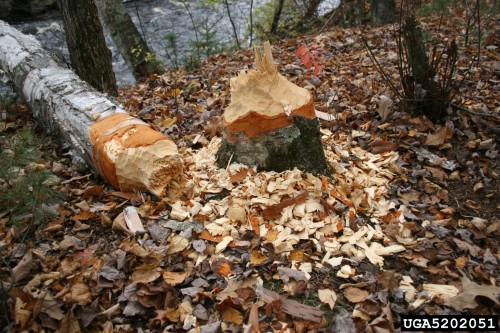
Beaver damage (photo courtesy of Steven Katovich - USDA)
Natural Control of Ticks and Mosquitoes in Shady Yards
Sugar Doesn’t Kill Weeds; Bees/Wasps Need Habitat Management
Spider Mite Control: Natural Solutions for Healthy Plants
Comprehensive Guide to Common Garden Pest Control
Canada Goose Control: Legal and Practical Options
Allegheny Mound Ants: Difficult to Control in NW Georgia
Beneficial Nematodes: Better for Greenhouses Than Gardens
Identifying and Removing Animals in the Attic
Protecting Fruit and Tomatoes from Squirrels
Argentine Ants in Kitchen: Identify, Bait, Seal—Don't Spray
Lubber Grasshopper (Georgia Thumper): Control Options for Large, Slow Pests
Organic Eradication of Smilax (Green Briar) Without Herbicides
Copyright © www.100flowers.win Botanic Garden All Rights Reserved