


A homeowner encountered a bizarre, well-camouflaged caterpillar with white cocoons on its back after brushing against it near a pond. The sting was worse than a bee's. The caterpillar was identified as a saddleback (Acharia stimulea), a slug caterpillar whose venomous spines cause intense burning. Ice remains the best relief; meat tenderizer or ammonia don't help.
The white cocoons belonged to braconid wasps—parasitoids that laid eggs inside the caterpillar in late August. The larvae consumed the host from within and emerged to pupate. While gruesome, this natural control reduces saddleback numbers.
Saddlebacks feed on many plants: canna, banana, lily, redbud, apple, pear, and more. They eventually become fuzzy, dark brown moths. Wear gloves when weeding in late summer to avoid accidental contact.
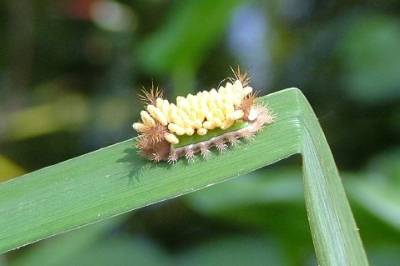
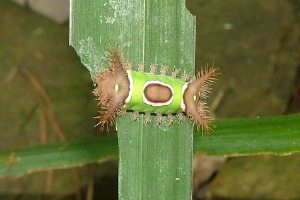
Identification: Green, saddle-shaped marking on back; prominent spines at both ends and along sides.
First Aid: Apply ice immediately; remove spines with tape if embedded.
Rosinweed (Silphium compositum): Taprooted Native Perennial
Pickleworms in Squash: Identification, Lifecycle, and Control
Silverfish Control: Reduce Humidity and Target Hiding Places
Dogfennel Identification and Control in Pastures and Landscapes
Understanding Chipmunk Burrows and Humane Management
Mystery Squash from Compost: Hybrid Cucurbit Surprises
Growing Cotton in Georgia: Legal Restrictions Protect the Industry
Copyright © www.100flowers.win Botanic Garden All Rights Reserved