


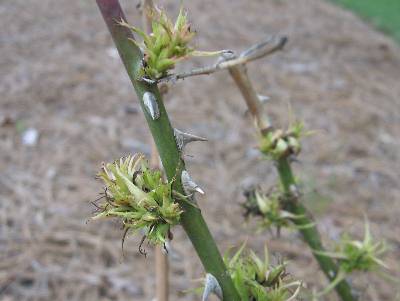
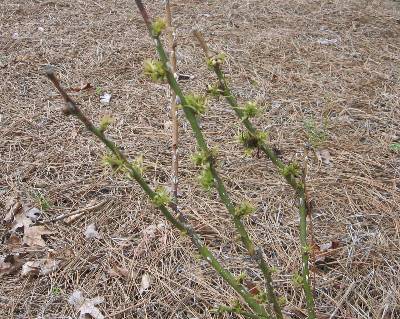
A rose bush that bloomed well last year now shows classic glyphosate (Roundup) injury: tiny, clustered leaves along the stems. This distinctive "witch's broom" growth is a hallmark of glyphosate exposure, whether from spray drift on a windy day or residue in an unwashed sprayer. Unfortunately, once a rose shows these symptoms, it rarely recovers and will likely die.
The best course is to remove the damaged plant and replace it next season. To prevent future accidents, dedicate separate sprayers for herbicides and other garden products, and avoid spraying on breezy days. Glyphosate damage is irreversible, but it's also a clear diagnostic sign that helps avoid repeat mistakes.
Madame Hardy Rose Care: Winter, Fertilizer, and Soil pH in Zone 5
Transplanting Heirloom Roses: Managing Root Damage
Identifying Mystery Roses for Wedding Flowers
Identifying an Unknown Yellow Hybrid Tea: Resources and Search Strategies
Growing Roses in Containers: Tips for Success and the Truth About Coffee Grounds
Does Roundup Harm Trees? Expert Insights on Glyphosate Safety Near Woody Plants
Glyphosate Drift on Tomatoes: Classic Symptoms, Fruit Safe If Plant Recovers
Identifying Garden Rodents: Voles, Moles, or Pocket Gophers?
Squirrels Damaging Outdoor Cushions in Allen, Texas
When Your Rose Changes Identity: 'Dr. Huey' Rootstock Takeover
Identifying Florist Roses: Why Photos Rarely Yield Names
Why Identifying a Rose from a Photo Is Nearly Impossible
Copyright © www.100flowers.win Botanic Garden All Rights Reserved