


You've spotted a tree with cherry-like leaves but something seems off. It might be black cherry (Prunus serotina), a common native tree that's more valuable to wildlife than to the home orchard.
Black cherry leaves are alternate, simple, and oval with fine teeth along the edges. They have a distinctive rusty-brown pubescence along the midrib on the underside. The bark on mature trees is dark and scaly, often described as resembling burnt potato chips. In spring, it produces long, drooping clusters of small white flowers, followed by tiny black fruits that birds devour.
While black cherry supports many caterpillars (including the eastern tent caterpillar) and provides food for birds, it has drawbacks in a yard. The fruit stains pavement, the tree is prone to storm damage due to brittle wood, and its coarse form doesn't fit manicured landscapes. It also self-seeds aggressively.
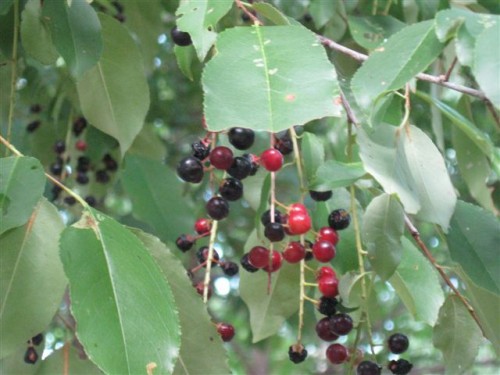
Black cherry tree
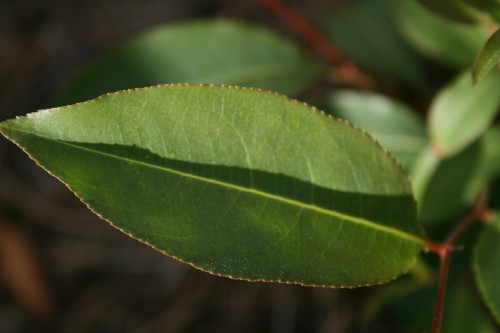
Black cherry foliage and bark
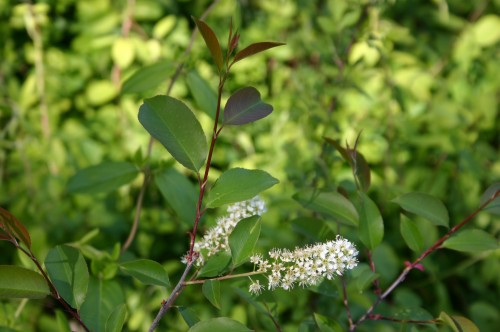
Black cherry fruit
If you have a black cherry growing where you don't want it, removal is easiest when the tree is young. For mature trees, consult an arborist.
Black Mold, Sarracenia Leaf Curl, and Nepenthes Identification from Australia
Wild Black Cherry (Prunus serotina): A Native Timber Tree with Bitter Fruit
Millet in the Yard: Birdseed Volunteer
Black Rat Snake: Beneficial Garden Resident
Spigelia (Indian Pink): Native Woodland Wildflower
Black Widow on Door Handle: No Nest, Just a Wanderer
Black Fuzzy Caterpillar with Red Rings: Giant Leopard Moth Larva
Identifying a Mystery Pear Variety from Fruit and Seed
Black Spots on New Orchid Growth: Fungal from Water on Leaves
Black Specks on Cut Roses: Insect Frass, Not Current Infestation
Copyright © www.100flowers.win Botanic Garden All Rights Reserved