


Those mysterious white spots appearing on your Japanese maple leaves are likely Phyllosticta, a common fungal disease. While unsightly, it rarely causes serious harm to established trees.
Look for small, circular white to tan spots with dark borders on leaves. The centers may fall out, creating a shot-hole appearance. Symptoms typically appear in late spring to early summer when conditions are favorable.
Phyllosticta thrives during periods of high humidity and moderate temperatures (60-80°F) when foliage remains wet for extended periods. Spring rains combined with tender new growth create ideal conditions.
For severe cases, propiconazole fungicide applied as a preventive spray in early spring can be effective. Two applications spaced 14 days apart, starting at bud break, provide good control. Always follow label instructions.
Most Japanese maples tolerate Phyllosticta well without intervention. The disease is primarily cosmetic and doesn't affect tree vigor unless infection is severe year after year. Focus on maintaining overall tree health through proper watering, mulching, and fertilization.
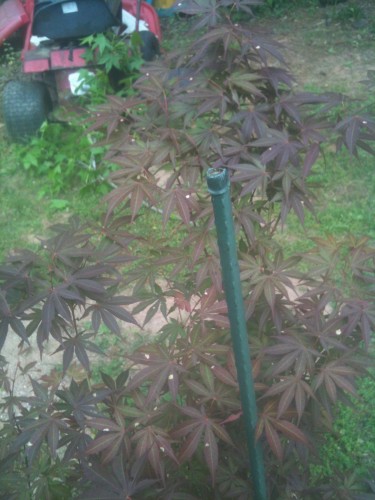
Typical Phyllosticta symptoms on Japanese maple foliage
Close view showing characteristic white spots with dark margins
Maple Leaf Spots and Tulip Tree Trunk Holes: Two Separate Issues
Maple Leaf Spots: Phyllosticta and Tar Spot
Japanese Maple Lost All Leaves After Planting: Shock or Deer?
White Spots on Dendrobium Leaves: Boisduval Scale or Mealybugs
Maple Leaf Spot: Phyllosticta—Mostly Cosmetic
Japanese Maple Transplant Shock and Leaf Scorch
Dwarf Japanese Maple Leaf Color Change: Sun Exposure and Watering
Black Spots on Maple Leaves: Tar Spot Fungus—Rake Leaves, Reduce Inoculum, Tree Usually Fine
Sunset Maple Decline: Premature Color, Leaf Spots, and Trunk Issues
White Powdery Spots on Maple Leaf Undersides: Likely Insects
Watering a Newly Planted Japanese Maple Through Winter
Japanese Maple Delayed Freeze Damage: Secondary Leaf Loss After Easter Freeze
Copyright © www.100flowers.win Botanic Garden All Rights Reserved