


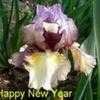
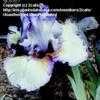
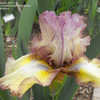
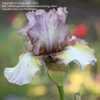
The Tall Bearded Iris 'Happy New Year' rings in celebration for the late spring garden. Introduced in 1989 by Byers, this cultivar brings the festive spirit of a new beginning to floral form—a toast to the garden's annual renewal.
| Family: | Iridaceae (eye-rid-AY-see-ee) |
| Genus: | Iris (EYE-ris) |
| Cultivar: | Happy New Year |
| Hybridized by: | Byers |
| Registered/Introduced: | 1989 |
Byers' 'Happy New Year' (1989) represents the late 1980s innovation of a program celebrated for pattern breaks. Holiday-themed names ('Christmas Time,' 'Easter Bonnet,' 'Valentine,' 'Happy New Year') form a charming subcategory in iris nomenclature. The name suggests a celebratory cultivar—perhaps a bright, clean bicolor, a sparkling luminata, or a cultivar with the kind of effervescent quality that mimics champagne bubbles. Byers' introductions are particularly noted for their innovative patterns and clean form. Tall bearded irises are heavy feeders; apply a balanced, low-nitrogen fertilizer (5-10-10 or 6-10-10) in early spring as growth begins, and again immediately after flowering. Avoid high-nitrogen fertilizers (lawn fertilizers, fresh manure), which promote soft, disease-prone foliage at the expense of flowers. The rhizomes must be planted at soil level in a slight mound—this is the single most critical cultural requirement for success. Full sun (minimum 6 hours) is essential for good bloom and strong stems.
Tall Bearded Iris 'Dauntless': A Historic 1929 Heirloom Cultivar
Tall Bearded Iris 'Amas': An 1885 Foster Collection
Tall Bearded Iris 'Hemstitched': A 1989 Hager Textural Wonder
Tall Bearded Iris 'Mesmerizer': A 1990 Byers Hypnotic
Tall Bearded Iris 'Ocelot': A 1997 Ghio Spotted Wonder
Tall Bearded Iris 'Acoma': A 1987 Magee Introduction
Tall Bearded Iris 'Bewilderbeast': A 1994 Kasperek Marvel
Tall Bearded Iris 'Buckwheat': A 1988 Byers Introduction
Tall Bearded Iris 'Conjuration': A 1988 Byers Introduction
Tall Bearded Iris 'Fogbound': A 1997 Keppel Introduction
Copyright © www.100flowers.win Botanic Garden All Rights Reserved