


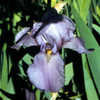
Hybridized by Butterick and introduced in 1948, Iris 'Seafarer' is a post-WWII tall bearded iris whose nautical name evokes the age of sail, the call of the horizon, and the rugged beauty of those who live by the sea. This late 1940s cultivar represents the continued development of American iris breeding in the post-war era.
1948 marked a resurgence in iris hybridization after wartime constraints. Returning servicemen, renewed international exchange, and growing garden club movements fueled a boom in new introductions. Butterick's 'Seafarer' emerged in this optimistic period, carrying a name that looked outward—to horizons, voyages, and new beginnings.
Late 1940s tall bearded irises typically showed: improved branching over pre-war types (3 branches), broader falls with some ruffling, 5–7 buds, good substance. Colors were clear and often fragrant. 'Seafarer' likely presents blue-violet tones—colors of the sea—perhaps a clear self or a subtle blend with a contrasting beard. The single image suggests a cultivar of elegant simplicity.
Historic TBs like 'Seafarer' offer a window into the post-war garden aesthetic: less flamboyant than modern types, more refined, often fragrant. They integrate beautifully into period-appropriate landscapes (1940s–50s homes, victory garden recreations). Culture is standard, though they may tolerate heavier soils better than some modern cultivars. A quiet veteran of the iris world, still sailing after 75+ years.
Tall Bearded Iris 'Mesmerizer': A 1990 Byers Hypnotic
Tall Bearded Iris 'Ocelot': A 1997 Ghio Spotted Wonder
Tall Bearded Iris 'Swerti': A 1612 Historic Survivor
Tall Bearded Iris 'Acoma': A 1987 Magee Introduction
Tall Bearded Iris 'Bewilderbeast': A 1994 Kasperek Marvel
Tall Bearded Iris 'Fogbound': A 1997 Keppel Introduction
Tall Bearded Iris 'Jumping': A 2000 Schreiner Introduction
Tall Bearded Iris 'Liaison': A 1986 Ghio Introduction
Tall Bearded Iris 'Rustler': A 1987 Keppel Introduction
Tall Bearded Iris 'Sambuca': A 2001 L. Johnson Introduction
Copyright © www.100flowers.win Botanic Garden All Rights Reserved