


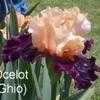

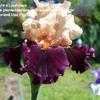
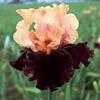
Hybridized by Ghio and introduced in 1997, Iris 'Ocelot' takes its name from the beautifully spotted wild cat of the Americas—a perfect metaphor for a tall bearded iris with a broken color or plicata pattern that mimics the ocelot's distinctive rosettes and spots.
The Ghio program (Keith and Kevin Ghio, California) has excelled in broken colors, plicatas, and luminatas—patterns where color is distributed in dots, dashes, veins, or stippling rather than solid blocks. 'Ocelot' (1997) likely showcases this expertise: a ground color (cream, yellow, pale orange) overlaid with contrasting spots, dashes, or veins in a darker tone (brown, maroon, purple), creating a wild, animalistic beauty.
Expect a broken color or plicata pattern: falls heavily marked with irregular spots/stippling; standards similarly patterned but perhaps less densely. The "ocelot" analogy suggests golden/tawny ground with dark brown/black markings. 1997 form: broad, ruffled falls; strong branching; 9+ buds; clean foliage. The patterning is often most intense near the beard and hafts, radiating outward.
Patterned TBs like 'Ocelot' are conversation magnets—their complexity rewards close viewing. Plant near paths, benches, or entries. They photograph beautifully. Culture: standard TB. Ghio cultivars are vigorous and adaptable. Divide every 3–4 years. In bright sun, the pattern may "vibrate" visually. A cultivar that brings a touch of the wild into the cultivated border.
Tall Bearded Iris 'Mesmerizer': A 1990 Byers Hypnotic
Tall Bearded Iris 'Seafarer': A 1948 Butterick Voyage
Tall Bearded Iris 'Swerti': A 1612 Historic Survivor
Tall Bearded Iris 'Acoma': A 1987 Magee Introduction
Tall Bearded Iris 'Bewilderbeast': A 1994 Kasperek Marvel
Tall Bearded Iris 'Fogbound': A 1997 Keppel Introduction
Tall Bearded Iris 'Jumping': A 2000 Schreiner Introduction
Tall Bearded Iris 'Liaison': A 1986 Ghio Introduction
Tall Bearded Iris 'Rustler': A 1987 Keppel Introduction
Tall Bearded Iris 'Sambuca': A 2001 L. Johnson Introduction
Copyright © www.100flowers.win Botanic Garden All Rights Reserved