


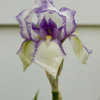
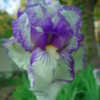

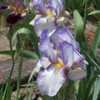
Registered in 1612, Iris 'Swerti' is one of the oldest named tall bearded iris cultivars in existence—predating the United States by over a century, the telescope by a few years, and modern science by epochs. This extraordinary survivor from the early 17th century represents the dawn of iris cultivation in European gardens.
1612: Shakespeare was writing his last plays; the King James Bible was fresh off the press; Galileo was observing Saturn's rings; Jamestown was struggling. In European gardens, iris enthusiasts were selecting and naming exceptional forms of Iris germanica and its allies. 'Swerti' (possibly named for a grower, location, or Latin descriptor) emerged from this world of monastic gardens, physic gardens, and early botanical collections.
As a 1612 cultivar, 'Swerti' is not a product of controlled hybridization (which began in earnest in the 19th century) but a selected clone of a natural hybrid or species form. It likely exhibits the "historic" TB phenotype: simple, elegant flowers with narrow petals, minimal ruffling, 2–3 branches, 4–6 buds, but often intense color, strong fragrance, and the rugged constitution of centuries of natural selection. The name may derive from Latin swert- (black/dark) suggesting a dark purple or violet color.
Growing 'Swerti' is an act of historical preservation. Culture: full sun, very well-drained alkaline soil (gritty, limestone-based ideal), shallow planting. May be more disease-susceptible in humid climates. Invaluable for: historical gardens, museum landscapes, genetic preservation, and the sheer awe of cultivating a plant that has bloomed in springs since the Renaissance. A 400+ year conversation with gardeners past.
Tall Bearded Iris 'Mesmerizer': A 1990 Byers Hypnotic
Tall Bearded Iris 'Ocelot': A 1997 Ghio Spotted Wonder
Tall Bearded Iris 'Seafarer': A 1948 Butterick Voyage
Tall Bearded Iris 'Acoma': A 1987 Magee Introduction
Tall Bearded Iris 'Bewilderbeast': A 1994 Kasperek Marvel
Tall Bearded Iris 'Fogbound': A 1997 Keppel Introduction
Tall Bearded Iris 'Jumping': A 2000 Schreiner Introduction
Tall Bearded Iris 'Liaison': A 1986 Ghio Introduction
Tall Bearded Iris 'Rustler': A 1987 Keppel Introduction
Tall Bearded Iris 'Sambuca': A 2001 L. Johnson Introduction
Copyright © www.100flowers.win Botanic Garden All Rights Reserved