


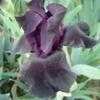
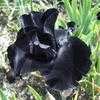
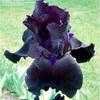
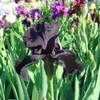
The Tall Bearded Iris 'Anvil of Darkness' forges a dramatic presence in the late spring garden with its profound, dark beauty. Introduced in 1998 by Innerst, this cultivar represents the cutting edge of dark iris breeding—a pursuit that has captivated hybridizers for decades. The name evokes strength, permanence, and the transformative power of fire and pressure.
| Family: | Iridaceae (eye-rid-AY-see-ee) |
| Genus: | Iris (EYE-ris) |
| Cultivar: | Anvil of Darkness |
| Hybridized by: | Innerst |
| Registered/Introduced: | 1998 |
Dark tall bearded irises—those approaching true black or deep, velvety purple—are among the most sought-after and challenging colors to breed. They require intense pigmentation without the muddy undertones that can dull the effect. Innerst's 1998 introduction 'Anvil of Darkness' represents significant progress in this difficult color line. As a modern TB, it should exhibit strong, well-branched stems (typically 3-4 branches plus terminal), high bud count (8-12+), and excellent substance. Dark-colored irises can be more susceptible to heat damage in very hot climates; the intense pigmentation absorbs more solar radiation. In zones 8-9, provide afternoon shade and ensure consistent moisture during bloom. The dramatic flowers make exceptional cut flowers and create stunning contrasts when paired with white, yellow, or pink companions.
Tall Bearded Iris 'Amas': An 1885 Foster Collection
Tall Bearded Iris 'Hemstitched': A 1989 Hager Textural Wonder
Tall Bearded Iris 'Mesmerizer': A 1990 Byers Hypnotic
Tall Bearded Iris 'Ocelot': A 1997 Ghio Spotted Wonder
Tall Bearded Iris 'Seafarer': A 1948 Butterick Voyage
Tall Bearded Iris 'Bewilderbeast': A 1994 Kasperek Marvel
Tall Bearded Iris 'Buckwheat': A 1988 Byers Introduction
Tall Bearded Iris 'Conjuration': A 1988 Byers Introduction
Tall Bearded Iris 'Fogbound': A 1997 Keppel Introduction
Tall Bearded Iris 'Jumping': A 2000 Schreiner Introduction
Copyright © www.100flowers.win Botanic Garden All Rights Reserved