



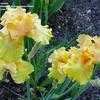
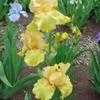
Hybridized by Brown and introduced in 1986, Iris 'Black Hills Gold' bears a name of regional treasure—referencing the distinctive pink/green/gold jewelry crafted from gold mined in South Dakota's Black Hills. This mid-1980s TB from the Brown program suggests a cultivar of unique, multicolored metallic beauty.
The 1980s saw explosive innovation in TB color patterns. Hybridizers were blending pink, gold, green, and brown tones to create "metallic" and "jewel" effects impossible in earlier decades. Brown's 1986 'Black Hills Gold' likely exhibits such a blend: perhaps a gold ground with pink and green veining, a luminata with multicolored rays, or a broken color with the distinctive tri-color mix of the jewelry.
1986 TB form: modern—broad, ruffled falls; 3–4 branches; 8–10 buds; good substance. The "Black Hills Gold" name implies a cultivar of precious metal quality: lustrous, multidimensional, changing in different light. Brown cultivars are typically vigorous and adaptable.
Standard TB culture. Metallic/multicolored TBs are most stunning in bright, direct light where their complexity reveals itself. Plant in open sun. Divide every 3–4 years. A cultivar that brings a piece of South Dakota's mineral heritage to gardens worldwide—a floral nugget of rare beauty.
Tall Bearded Iris 'Vanity': A 1974 Hager Introduction
Tall Bearded Iris 'Dauntless': A Historic 1929 Heirloom Cultivar
Tall Bearded Iris 'Amas': An 1885 Foster Collection
Tall Bearded Iris 'Hemstitched': A 1989 Hager Textural Wonder
Tall Bearded Iris 'Mesmerizer': A 1990 Byers Hypnotic
Tall Bearded Iris 'Swerti': A 1612 Historic Survivor
Tall Bearded Iris 'Acoma': A 1987 Magee Introduction
Tall Bearded Iris 'Bewilderbeast': A 1994 Kasperek Marvel
Tall Bearded Iris 'Buckwheat': A 1988 Byers Introduction
Tall Bearded Iris 'Conjuration': A 1988 Byers Introduction
Copyright © www.100flowers.win Botanic Garden All Rights Reserved