


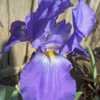
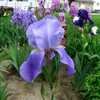

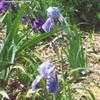
Hybridized by Whiting and registered in 1945, Iris 'Blue Rhythm' is a World War II-era tall bearded iris that carries the musical optimism of its name into the garden. This historic cultivar represents the American iris breeding effort during a time when the world was at war, yet hybridizers continued their patient work of creation.
The 1940s were a challenging but productive decade for American iris hybridization. Many breeders maintained their programs despite material shortages and personal hardships. The Sass brothers, Schreiners, and numerous regional hybridizers continued making crosses and registering introductions. 'Blue Rhythm' (1945) emerged in the war's final year—a testament to the persistence of beauty amid darkness.
Mid-1940s tall bearded irises typically exhibited: elegant but relatively narrow petals (by modern standards), minimal ruffling, 2–3 branches with 4–6 buds, good substance for the era, and often delightful fragrance. Colors were clear and intense—'Blue Rhythm' likely presents a clear mid-blue or blue-violet self, perhaps with a contrasting beard. The "rhythm" may refer to the wave-like succession of blooms along the stalk.
Historic irises like 'Blue Rhythm' offer a different aesthetic: less flamboyant, more refined. They integrate beautifully into mixed borders where modern "dinner plate" blooms might overwhelm. Their often-superior fragrance is a bonus. Culture is standard, though they may appreciate slightly richer soil than modern heavy-feeders. A poignant choice for victory gardens, historical collections, and those who value the quiet dignity of mid-century iris forms.
Tall Bearded Iris 'Vanity': A 1974 Hager Introduction
Tall Bearded Iris 'Dauntless': A Historic 1929 Heirloom Cultivar
Tall Bearded Iris 'Amas': An 1885 Foster Collection
Tall Bearded Iris 'Blue Rhythm': A 1945 Whiting Introduction
Tall Bearded Iris 'Hemstitched': A 1989 Hager Textural Wonder
Tall Bearded Iris 'Seafarer': A 1948 Butterick Voyage
Tall Bearded Iris 'Swerti': A 1612 Historic Survivor
Tall Bearded Iris 'Acoma': A 1987 Magee Introduction
Tall Bearded Iris 'Bewilderbeast': A 1994 Kasperek Marvel
Tall Bearded Iris 'Buckwheat': A 1988 Byers Introduction
Copyright © www.100flowers.win Botanic Garden All Rights Reserved