



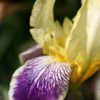
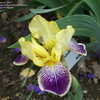
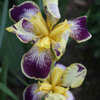
Hybridized by Goos-Koenemann and introduced in 1909, Iris 'Loreley' is a historic Border Bearded (BB) iris that has enchanted gardeners for over a century. Named for the legendary Rhine River siren, this cultivar embodies the grace and allure of its mythological namesake.
Border Bearded irises stand 16–27.5 inches tall—shorter than tall bearded but blooming at the same time (late spring). They share the same flower form and cultural needs as TBs but on a more compact scale, making them ideal for smaller gardens, border fronts, and windy sites where tall stalks might snap. 'Loreley' is notable for being classified across BB, IB, and TB categories, reflecting the fluid height boundaries of historic cultivars.
Introduced in 1909 by German hybridizer Goos-Koenemann, 'Loreley' represents the early European contributions to modern iris breeding. The name references the Lorelei rock on the Rhine, immortalized in Heine's poem—a romantic, cultural touch typical of the era. This cultivar has survived two world wars and countless garden trends, a testament to its constitution and charm.
Expect the classic bearded iris flower in a more compact package: fans of blue-green foliage, branched stalks with multiple buds, and blooms with standards, falls, and beards. The 1909 vintage suggests simpler form—narrower petals, less ruffling—but often with intense color saturation and fragrance. Culture is identical to TB irises: full sun, sharp drainage, shallow planting. Divide every 3–4 years. A living piece of iris history for the modern garden.
Intermediate Bearded Iris 'Concertina': A 1999 Sutton Introduction
Tall Bearded Iris 'Amas': An 1885 Foster Collection
Tall Bearded Iris 'Hemstitched': A 1989 Hager Textural Wonder
Tall Bearded Iris 'Mesmerizer': A 1990 Byers Hypnotic
Tall Bearded Iris 'Ocelot': A 1997 Ghio Spotted Wonder
Tall Bearded Iris 'Acoma': A 1987 Magee Introduction
Tall Bearded Iris 'Bewilderbeast': A 1994 Kasperek Marvel
Tall Bearded Iris 'Buckwheat': A 1988 Byers Introduction
Tall Bearded Iris 'Conjuration': A 1988 Byers Introduction
Tall Bearded Iris 'Fogbound': A 1997 Keppel Introduction
Copyright © www.100flowers.win Botanic Garden All Rights Reserved