


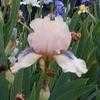
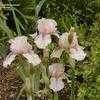


Hybridized by Sutton and registered in 1999, Iris 'Concertina' represents the modern Intermediate Bearded (IB) class—irises that bridge the gap between dwarf and tall bearded types, offering the best of both worlds: substantial flowers on sturdy, wind-resistant stems.
IB irises stand 16–27.5 inches tall and bloom slightly earlier than tall bearded irises, typically overlapping with the late SDB and early TB seasons. They inherit compact stature from Iris pumila ancestry while expressing the larger flowers and broader color range of TB breeding. Modern IBs like 'Concertina' exhibit dramatically improved form over early intermediates—broad, ruffled falls, heavy substance, and high bud counts on well-branched stalks.
The name 'Concertina' suggests a cultivar with pleated, folded, or ruffled petals—reminiscent of the musical instrument's bellows. Sutton's 1999 introduction would showcase contemporary IB breeding advances: flowers approaching TB size on shorter, sturdier stems; excellent branching with 5–7+ buds; clean, disease-resistant foliage; and vigorous increase. IBs are among the most garden-worthy irises, combining visual impact with structural resilience.
Culture mirrors tall bearded irises but with even greater wind tolerance due to shorter stature. Full sun, well-drained soil, shallow planting. IBs are excellent for mixed borders where TBs might overwhelm companions. Their earlier bloom extends the iris season. Divide every 3–4 years in late summer. Fertilize lightly in early spring. An underutilized class that deserves wider planting.
Intermediate Bearded Iris 'Agatha Christie': A 1996 Sutton Mystery
Intermediate Bearded Iris 'Raspberry Blush': A 1975 Hamblen Delight
Appleblossom Pink Intermediate Bearded Iris: A Soft Pink Classic from 1973
Lemon Pop Intermediate Bearded Iris: A Bright Yellow Cultivar from 1989
Intermediate Bearded Iris 'Oklahoma Bandit': A Striking Garden Performer
Intermediate Bearded Iris 'Pink Kitten': Charming Mid-Season Beauty
Intermediate Bearded Iris 'Season Ticket': Reliable Annual Performance
Intermediate Bearded Iris 'Smitten Kitten': Playful Charm in the Border
Intermediate Bearded Iris 'Gypsy Queen': Salter's 1859 Heirloom
Intermediate Bearded Iris 'Miss Mauve': Tasco's 2000 Gentle Lady
Intermediate Bearded Iris 'Apollo's Touch': Nichols' 1990 Divine Contact
Intermediate Bearded Iris 'Butter Pecan': Hager's 1983 Nutty Delight
Intermediate Bearded Iris 'Calling Card': Messick's 1990 Signature
Intermediate Bearded Iris 'Champagne Encore': Aitken's 1997 Celebration
Copyright © www.100flowers.win Botanic Garden All Rights Reserved