



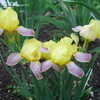
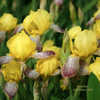
Dating back to 1884, Iris 'Gracchus' is a remarkable survivor from the dawn of modern iris hybridization. Hybridized by Ware and classified as a Miniature Tall Bearded (MTB) iris with Iris variegata species influence, this cultivar offers a direct link to the 19th-century foundations of the genus.
Introduced in 1884, 'Gracchus' predates the formation of the American Iris Society (1920) and represents the pioneering work of early hybridizers. The species Iris variegata, native to Central and Eastern Europe, contributed distinctive veining and color patterns to early breeding lines. Ware's 'Gracchus' stands as a living artifact of Victorian-era horticulture.
As a Miniature Tall Bearded iris, 'Gracchus' occupies a charming middle ground: taller than standard dwarf bearded (SDB) types but more compact than tall bearded (TB) irises, typically reaching 16–27 inches in height. The flowers are correspondingly smaller but possess the same intricate architecture—standards, falls, and beards—in a more delicate, refined package. The variegata heritage often imparts striking veining, stippling, or bicolor patterns.
MTB irises share the same cultural needs as their taller cousins: full sun, well-drained soil, and shallow planting. Their smaller stature makes them ideal for rock gardens, border fronts, and mixed perennial beds where larger irises might overwhelm companions. Divide clumps every 3–4 years in late summer to maintain vigor.
Immortality Tall Bearded Iris: A Reblooming White Beauty from 1982
Clarence Tall Bearded Iris: A Soft Blue Rebloomer from 1990
Superstition Tall Bearded Iris: A Dark, Dramatic Cultivar from 1977
Wabash Tall Bearded Iris: A Historic Bicolor from 1936
Tall Bearded Iris 'Breakers': A 1986 Schreiner Classic
Tall Bearded Iris 'Silverado': A 1986 Schreiner Silver Beauty
Miniature Tall Bearded Iris 'Gracchus': An 1884 Historic Treasure
Tall Bearded Iris 'Vanity': A 1974 Hager Introduction
Tall Bearded Iris 'Dauntless': A Historic 1929 Heirloom Cultivar
Tall Bearded Iris 'Amas': An 1885 Foster Collection
Tall Bearded Iris 'Hemstitched': A 1989 Hager Textural Wonder
Tall Bearded Iris 'Mesmerizer': A 1990 Byers Hypnotic
Copyright © www.100flowers.win Botanic Garden All Rights Reserved