


| Family: | Pinaceae (py-NAY-see-ee) (Info) |
| Genus: | Pinus (PY-nus) (Info) |
| Species: | halepensis (ha-le-PEN-sis) (Info) |
The Aleppo Pine (Pinus halepensis) is the **quintessential pine of the Mediterranean basin**, native from Spain and Morocco to the Levant. It is a master of survival in **hot, dry, nutrient-poor, limestone soils**—a pioneer of degraded lands and a cornerstone of Mediterranean forestry and reforestation.
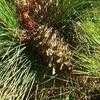
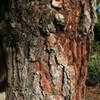
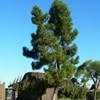
A **medium-sized, irregularly branched tree**, 30–60 feet tall, often with a twisted, picturesque trunk and a broad, rounded, open crown. Needles are **in pairs, 2.5–4 inches long, slender, light green to yellowish-green**, somewhat sparse. Cones are **2–4 inches long, ovoid, reddish-brown, often curved back on the stem (reflexed)**, and **serotinous (remain closed for years, opening after fire heat)**—a key fire adaptation. Bark is thick, deeply fissured, reddish-brown to gray.
**Extremely drought-tolerant** (survives on 250mm rain/year). **Fire-adapted**: serotinous cones release seeds onto ash beds after fire. **Widely planted for reforestation, dune stabilization, and timber** (pulp, construction) in Mediterranean climates worldwide (California, Chile, South Africa, Australia). **Invasive in parts of South Africa, Australia, and California**—spreads into native shrublands. Check local status.
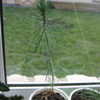
USDA Zones 8–10. **Full sun; thrives in poor, alkaline, rocky, well-drained soils.** Intolerant of shade and wet feet. Fast growth in youth. Used for windbreaks, shade, bonsai, and Christmas trees in warm climates. A tough, historic, fire-resilient pine for the world's mediterranean zones—plant with awareness of escape potential.
Hosta plantaginea: The Fragrant Species with Giant White Flowers
Scots Pine (Pinus sylvestris): Classic Eurasian Conifer
Chonta Palm (Juania australis): Rare Chilean Palm
European Hornbeam (Carpinus betulus): The Classic Hedge & Shade Tree
Plumeria pudica: The Everblooming, Evergreen Frangipani
Durian (Durio zibethinus): The King of Fruits—Love It or Hate It
Washingtonia × filibusta: The Hybrid Fan Palm for Marginal Climates
Comfortroot (Hibiscus aculeatus)
Hibiscus hamabo: Coastal Species
Mandrinette – Hibiscus boryanus
Furcraea macdougalii: A Giant, Trunk-Forming Relative of Agave
Euphorbia bupleurifolia: A Bizarre, Pineapple-Topped Succulent with a Caudex
Candelilla (Euphorbia antisyphilitica): A Leafless, Wax-Producing Shrub for Extreme Heat
Copyright © www.100flowers.win Botanic Garden All Rights Reserved