


Black Locust, also called Yellow Locust or False Acacia, is a fast-growing, nitrogen-fixing tree native to the Appalachian and Ozark Mountains but widely naturalized across North America and Europe. Robinia pseudoacacia (family Papilionaceae/Fabaceae) is a study in contrasts: invaluable for erosion control, honey production, and durable wood, yet aggressively invasive in many regions.
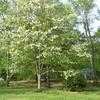
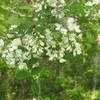
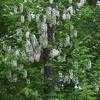
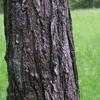
In late spring, the tree is draped in pendulous clusters (4-8 inches) of intensely fragrant, white, pea-like flowers—a major nectar source for honeybees. The flowers are edible (fritters, tea). The leaves are pinnately compound with 7-19 oval leaflets, blue-green. The bark is deeply furrowed, dark, and ropey. The wood is exceptionally hard, dense, rot-resistant, and high in BTU—prized for fence posts, firewood, and outdoor furniture.
| Family: | Papilionaceae (pa-pil-ee-uh-NAY-see-ee) |
| Genus: | Robinia (roh-BIN-ee-uh) |
| Species: | pseudoacacia (soo-doh-a-KAY-see-uh) |
| Synonym: | Robinia pseudoacacia var. pyramidalis |
| Synonym: | Robinia pseudoacacia var. rectissima |
| Synonym: | Robinia pseudacacia f. inermis |
Black Locust spreads aggressively by root suckers and seeds, forming dense thickets that displace native vegetation in prairies, savannas, and forest edges. It's listed as invasive in many states and countries. The thorns on young growth (thornless cultivars exist) and brittle wood (storm damage) add management challenges.
If planting, choose sterile or low-seed cultivars like 'Purple Robe' (purple-pink flowers), 'Frisia' (golden foliage), or 'Twisty Baby' (contorted, dwarf). Site carefully away from natural areas. For erosion control on disturbed sites, its nitrogen fixation and rapid growth are unmatched. The flowers produce world-class honey (acacia honey). Consider native alternatives like Cladrastis kentukea (Yellowwood) for similar flowers without invasiveness.
False Sisal Agave (Agave decipiens): A Large, Clumping Agave
Black Bamboo (Phyllostachys nigra)
Xanthorhiza simplicissima: Yellow Root – Native Spreading Shrub for Shade
Duchesnea chrysantha: False Strawberry – Yellow Flowers, Red Insipid Fruit
False Oregano (Lippia micromera): Tropical Aromatic Shrub
Black Medic (Medicago lupulina): Nitrogen-Fixing Weed with Tiny Yellow Flowers
False Aralia (Schefflera elegantissima): The Lacy, Tropical Foliage Plant
Black Mulberry (Morus nigra): The Flavor King of Mulberries
Yellow Anise Tree (Illicium parviflorum): Fragrant Foliage for Shade
Austrian Pine (Pinus nigra): Tough Evergreen for Challenging Sites
Ponderosa Pine: The Majestic Western Yellow Pine
Yellow Bauhinia (Bauhinia tomentosa): Bell-Shaped Blooms
Japanese Cedar 'Black Dragon' (Cryptomeria japonica): Dark, Dramatic, and Distinctive
Copyright © www.100flowers.win Botanic Garden All Rights Reserved