


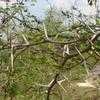
Bull's-Horn Acacia (Acacia sphaerocephala) is a fascinating myrmecophyte—an "ant-plant" that has evolved a mutualistic relationship with stinging ants. Its most striking feature: pairs of huge, inflated, hollow thorns at each node, resembling bull horns, which house ant colonies.
The ants live inside the swollen thorns and feed on nectar from extrafloral nectaries and protein-rich Beltian bodies on leaflet tips. In return, they aggressively defend the tree from herbivores and clear competing vegetation. This classic symbiosis is a textbook example of coevolution.
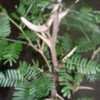
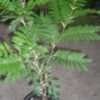
A small, fast-growing tree to 15–25 feet with feathery, bipinnate leaves and yellow pom-pom flowers. Native to dry forests of Central America. In cultivation, it needs full sun, excellent drainage, and frost-free conditions. Without its ant partners, it's vulnerable to browsing. A conversation piece for tropical collections and ecological gardens.
Hosta plantaginea: The Fragrant Species with Giant White Flowers
Comfortroot (Hibiscus aculeatus)
Hibiscus hamabo: Coastal Species
Mandrinette – Hibiscus boryanus
Furcraea macdougalii: A Giant, Trunk-Forming Relative of Agave
Euphorbia bupleurifolia: A Bizarre, Pineapple-Topped Succulent with a Caudex
Bull's-Horn Acacia (Acacia sphaerocephala): The Ant-Plant with Swollen Thorns
Candelilla (Euphorbia antisyphilitica): A Leafless, Wax-Producing Shrub for Extreme Heat
Desert Rose (Adenium arabicum)
Dorstenia gigas (Socotra Fig Tree)
Bontaalwyn (Aloe grandidentata): A Toothed Aloe Beauty
Jatropha mahafalensis: A Rare, Caudiciform Succulent Shrub
Yucca desmetiana: A Soft-Leaved, Blue-Green Yucca
Allthorn (Koeberlinia spinosa): A Leafless, Thorny Desert Shrub
Copyright © www.100flowers.win Botanic Garden All Rights Reserved