


Willow Oak stands out among oaks for its distinctive narrow, willow-like leaves that create a fine texture unusual in the genus Quercus. Native to bottomlands and wet woods from New York to Florida and west to Texas, Quercus phellos combines the strength and longevity of an oak with a delicate, graceful appearance.
The leaves are 2-5 inches long but only ½-1 inch wide, bright green above and paler beneath, turning yellow to russet in fall. This fine texture gives the tree a soft, almost feathery appearance from a distance. The tree grows 40-60 feet tall (occasionally to 100 feet) with a straight trunk and an oval to rounded crown. The bark is gray-brown, developing shallow furrows with age. Acorns are small (½ inch), round, with a shallow cap—important food for waterfowl and other wildlife.
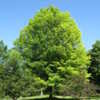
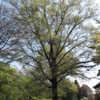
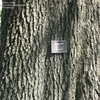

| Family: | Fagaceae (fag-AY-see-ee) |
| Genus: | Quercus (KWER-kus) |
| Species: | phellos (FEL-ohs) |
Willow Oak's natural affinity for wet, poorly drained soils makes it invaluable for difficult sites where other shade trees struggle. It tolerates flooding, compaction, and urban conditions remarkably well. Once established, it also handles moderate drought. Its relatively fast growth rate (for an oak) and clean habit (minimal twig drop) make it a premier street and shade tree.
It's widely planted in southeastern cities and increasingly used in northern areas (hardy to zone 5). The small acorns are less messy than those of many oaks. Willow Oak supports hundreds of caterpillar species, making it a keystone species for birds. It transplants more easily than many oaks due to its fibrous root system.
Breadfruit (Artocarpus altilis): Staple Crop of the Pacific
Lychee (Litchi chinensis): Tropical Fruit Delicacy
Lemon Tree: The Classic Citrus for Fruit, Fragrance & Foliage
Chonta Palm (Juania australis): Rare Chilean Palm
European Hornbeam (Carpinus betulus): The Classic Hedge & Shade Tree
Plumeria pudica: The Everblooming, Evergreen Frangipani
Durian (Durio zibethinus): The King of Fruits—Love It or Hate It
Willow Oak (Quercus phellos): Fine-Textured Shade Tree for Wet Sites
Washingtonia × filibusta: The Hybrid Fan Palm for Marginal Climates
Swamp Oak / Longleaf Ironwood (Casuarina glauca): The Salt-Tolerant She-Oak
Gopher Apple (Licania michauxii): Native Coastal Ground Cover
Copyright © www.100flowers.win Botanic Garden All Rights Reserved