


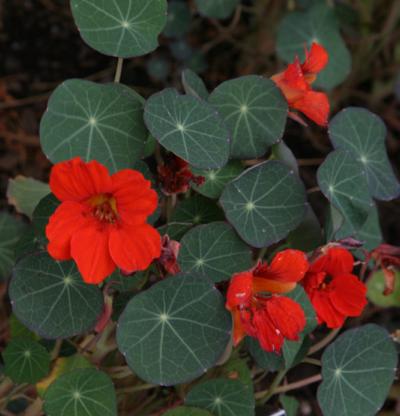
Tropaeolum majus 'Empress of India' is a classic heirloom nasturtium forming a neat 12-inch mound. Its standout feature is the double, deep scarlet flowers that appear from summer into fall. Like all nasturtiums, the rounded leaves and five-petaled blossoms are edible with a pleasant peppery flavor. This South American native brings vintage charm to cottage gardens, herb beds, and containers.
Full sun and moist, well-drained soil are ideal. Lean soil promotes heavier flowering. Tolerates light shade but with reduced bloom. Avoid over-fertilizing, which leads to excessive foliage growth.
Sow seeds indoors 4-6 weeks before last frost or direct-sow after danger of frost. Water consistently until established. Deadhead to prolong flowering. Plants are fast-growing and low-maintenance.
Potential pests include caterpillars, flea beetles, aphids, slugs, whiteflies, and viruses. Monitor regularly and treat organically if needed.
Chives (Allium schoenoprasum): Edible, Pom-Pom Flowers for Herb and Cottage Gardens
Frikart’s Aster (Aster × frikartii): Long-Blooming Violet-Blue Flowers
Delphinium 'Bluebird': Pacific Hybrid with White-Centered Blue Flowers
Dianthus gratianopolitanus (Cheddar Pink): Fragrant Mats for Rock Gardens
Summer Hyacinth (Galtonia candicans): Fragrant White Spikes for Late Summer
Rain Lily (Habranthus robustus): Pink Blooms After Summer Rain
Chicago Hydrangea Bloom Failure: Frost and Variety Solution
Hummingbird Mint 'Desert Sunrise' (Agastache 'Desert Sunrise'): Reddish-Pink Spikes with Orange Tint
Japanese Honeysuckle: Fragrant but Aggressive Vine
Coral Honeysuckle: Native Vine for Hummingbirds
Ruby Grass: Fluffy Amethyst-Pink Plumes for Summer Heat
Sourwood (Oxydendrum arboreum)
Stylophorum diphyllum: Celandine Poppy for Moist Shade and Yellow Blooms
Copyright © www.100flowers.win Botanic Garden All Rights Reserved