


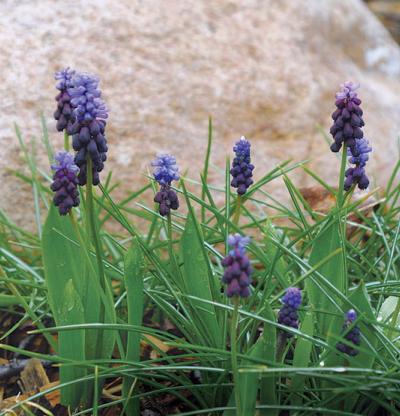
From fleshy leaves arise bell-shaped, purplish blue, sometimes almost black, flowers. Flower heads appear two-toned due to paler crowns, which are sterile flowers. Good for naturalizing in gardens or lawns, for forcing or container displays, and for rock gardens.
Dark purple-blue flowers in spring with a two-tone effect. Good early color. Can be forced. Adaptable to various growing conditions, but must have well-drained soil.
Likes fertile, moist but well-drained soil in full sun. Will take part shade. Plant 3–4 inches deep in groups or drifts in fall. Lift and divide when dormant in late summer or early fall.
Divide when dormant; remove offsets in summer; sow seeds in containers in a cold frame in fall.
Generally problem free but prone to viruses.
Will a Trimmed Ocotillo Flower Again?
Orchid Flowers Browning and Falling: End of Bloom or Root Trouble?
Phalaenopsis schilleriana Flowers Died: End of Cycle or Root Problem?
Cymbidium Bud Blast: Cold Drafts, Heat Vents, and Ethylene
Will My Phalaenopsis Bloom Again? Post-Flower Care
Identifying Indian Flowers from a Photo Album
Why a Cardinal Flower Changed from Red to White Blooms
Drosera capensis Flower Cycle: Normal Wilting
Sarracenia flava First to Flower: Orange-Red Buds, Yellow Blooms, Self-Pollination Guide
Comprehensive Guide to Flowering Jasmine Indoors: Pruning, Support, Fertilizer, and Harvest
Anthurium as National Flower: No Country Claims It
Flower Combination Guide: Fragrance, Longevity, and Design Principles
Copyright © www.100flowers.win Botanic Garden All Rights Reserved