


1. Home
  2. Question and Answer
  3. Houseplants
  4. Garden Articles
  5. Most Popular Plants
  6. Plant Nutrition

Tuberose (Polianthes tuberosa): Growing the Queen of Fragrance

Tuberose is the undisputed monarch of floral perfume—its rich, heady, sweet scent has captivated noses for centuries, earning it names like rajnigandha (Hindi, "night-fragrant"), Ye Lai Xiang (Chinese, "fragrance that comes at night"), and azucena (Spanish). Native to Mexico, this tender perennial grows from tuberous roots, sending up spikes of waxy, funnel-shaped white flowers in mid-to-late summer. Its essential oil is a prized (and costly) perfume ingredient.
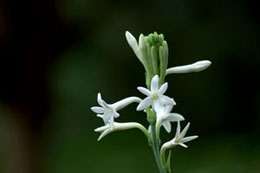
Tuberose flower spikes

Botanical Basics

  • Botanical Name: Polianthes tuberosa (syn. Agave amica)
  • Family: Asparagaceae (subfamily Agavoideae)
  • Type: Tender perennial (tuberous-rooted)
  • Height: 2–3 ft (flower spikes)
  • Bloom: Mid-summer to fall (3–4 months after planting)
  • Flowers: Waxy white, funnel-shaped, intensely fragrant (especially evening)
  • Foliage: Basal rosette of linear, grass-like leaves
  • Zones: 7–10 (lift tubers in colder zones)
  • Symbolism: Dangerous pleasure, voluptuousness, sensuality

Planting Tuberose

Timing

  • Zones 7–10: Plant in spring after frost.
  • Colder zones: Start indoors 6–8 weeks before last frost; transplant out after danger passes. OR plant directly in ground and lift in fall.

Site & Soil

  • Sun: Full sun (6+ hrs) for best bloom; tolerates light shade in hottest climates.
  • Soil: Rich, well-drained, slightly acidic (pH 6.0–6.5). Amend heavily with compost.
  • Drainage: Critical—tubers rot in wet soil. Raised beds or containers ideal.

Planting Depth & Spacing

  • Plant tubers 2–3" deep, pointed end up.
  • Space 6–8" apart in ground; 3–4 per 12" pot.
  • Water well after planting; then sparingly until growth appears.

Care for Maximum Fragrance

  • Water: Consistent moisture during active growth; soak deeply. Reduce after flowering.
  • Fertilizer: Heavy feeder. Monthly balanced fertilizer (10-10-10) or high-phosphorus (5-10-5) during growth. Container: biweekly liquid feed.
  • Mulch: 2" organic mulch to conserve moisture, suppress weeds.
  • Staking: Tall spikes may need support in wind.
  • Cut Flowers: Harvest when 1–2 bottom flowers open; spikes continue opening indoors. Sear stems for longevity.

Overwintering (Zones <7)

  1. After frost kills foliage, dig tubers carefully.
  2. Shake off soil; cut stems to 2".
  3. Cure 1–2 weeks in warm, airy, shaded spot.
  4. Store in peat moss, vermiculite, or paper bags at 40–50°F (4–10°C).
  5. Check monthly; discard any soft/rotten tubers.
  6. Replant in spring.

Container Growing

  • Use 12"+ deep pots with drainage.
  • Quality potting mix + compost + perlite.
  • Full sun; consistent water/feed.
  • Move to protected spot in fall; overwinter dry in pot (cool, dark) or lift tubers.

Propagation

  • Offsets: Tubers produce small offsets; separate at planting time.
  • Seeds: Rarely used; slow (years to bloom); may not come true.

Pests & Problems

  • Root Rot: Poor drainage/overwatering. Ensure sharp drainage.
  • Spider Mites: Hot, dry conditions. Increase humidity; spray neem.
  • Thrips: Distort flowers. Blue sticky traps; spinosad.
  • Virus: Streaked/mottled leaves. Remove/destroy plant; control aphids.

Harvesting for Fragrance

Commercial oil extraction uses solvent extraction (concrete/absolute) or enfleurage—thousands of flowers for 1 oz oil. Home gardeners can:

  • Float flowers in bowls of water for room scent.
  • Layer in sugar for scented sugar.
  • Infuse in carrier oil (jojoba) for massage oil (cold infusion, 4–6 weeks).
  • Make potpourri with dried flowers + fixative (orris root).

Tuberose demands sun, drainage, and feeding—but repays you with one of nature's most intoxicating perfumes. A single spike can scent a room for days.

Copyright © www.100flowers.win Botanic Garden All Rights Reserved