


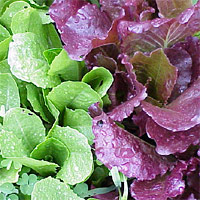
"Lettuce" is synonymous with "salad" globally. Cultivated for over 2,000 years, it remains the most popular salad plant.
Don't think all lettuce is the same! A wonderful diversity of varieties exists, each with distinct flavor, texture, and color—allowing remarkably different salads just by varying your lettuce choices. Lettuce is a cool-weather crop. Sow seeds as soon as the ground can be worked in spring, followed by small sowings every 10–14 days until late spring in warm areas or early summer in the North.
Select a site with full sun and well-drained soil. Light midday shade can extend the harvest season. Loosen soil to 12–15 inches and mix in a 2- to 4-inch layer of compost.
For earliest harvest, start seeds indoors 6–8 weeks before the last frost and transplant after 3 weeks. Sow indoors ½ inch apart, ¼ inch deep, in 4-inch-deep flats. Transplant spacing: 3–4 inches for leaf lettuce, 6–8 inches for Cos and loose-headed types, 12–16 inches for firm-headed types. Direct-sow outdoors ¼–½ inch deep in beds or rows. Plant heat-resistant varieties for late spring sowings in semi-shade to extend harvest into summer. Start fall crops in flats or direct-sow in midsummer (North) or late summer (central/South).
Mulch in early summer to keep soil cool. Water during summer if rainfall is less than 1 inch per week. Pests and diseases are rare in home plantings. Contact your extension office for slug, earwig, or whitefly controls if needed.
Harvest leaf lettuce as soon as leaves are large enough to eat. For steady harvest, cut heading types before full size. Harvest in early morning when leaves are crisp and moisture-filled.
Fall Pruning Lavender/Rosemary and Sedum Support
Mandevilla (Dipladenia) Leaf Yellowing: Light and Water Fixes
Which Houseplants Tolerate Morning Sun on a Hong Kong Balcony?
Long Island Perennial Garden Design: Four-Season Interest for Sun and Shade
Dividing Hostas in Summer Heat
Summer Fertilizing: Rest Cool-Season Grass, Feed Warm-Season Wisely
Summer Fertilizer for Cool-Season Grass: Skip the "Summer Guard"
Why You Should Not Fertilize Kentucky Bluegrass in Summer
Caterpillars on Lettuce and Squash: Identifying and Managing Pickleworms Organically
Green Stripes on Yellow Squash: Cross-Pollination or Maturity?
Winter Vegetable Gardening in Frost-Free, Hot Climates
Extending Lettuce Harvest: Outer Leaf Picking and Bolting Signs
Why Iceberg Lettuce Bolts Instead of Heading in Florida Heat
Copyright © www.100flowers.win Botanic Garden All Rights Reserved