


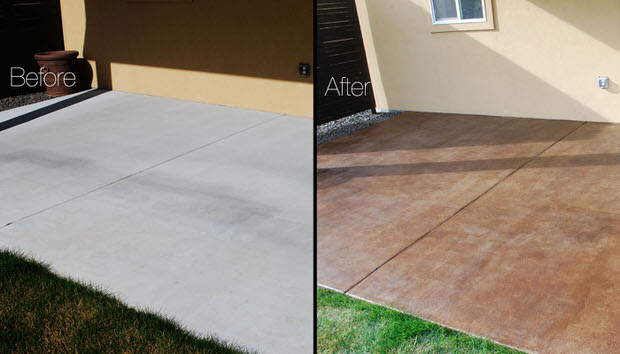
Concrete patios are functional but bland. This DIY staining method delivers a rich, textured, rustic look—no sprayer, no commercial products, minimal cost.
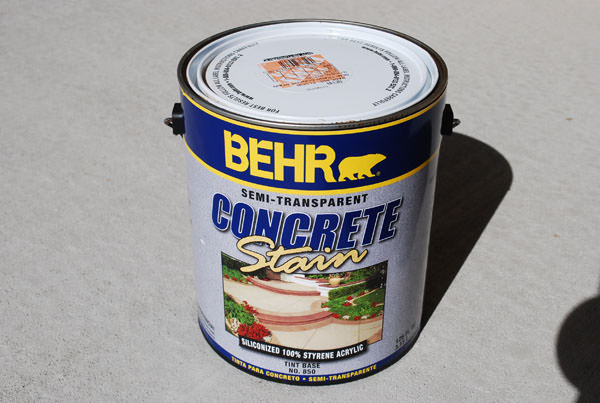
Drip water on concrete. Absorbs in minutes? Ready to stain. Beads up? Strip/etch first (Behr stripper or similar). If no stripping needed, clean thoroughly with water + vinegar (no rinse needed) or mild soap (rinse required). Dry completely.
Two-person job: one rolls stain in small sections, the other dabs texture with a sponge before it dries. Keep edges wet to avoid hard lines. First coat looks rough—don't panic! Second coat transforms it. Third adds richness (we stopped at two).
Tip: Tear sponge edges to avoid hard-edge marks.
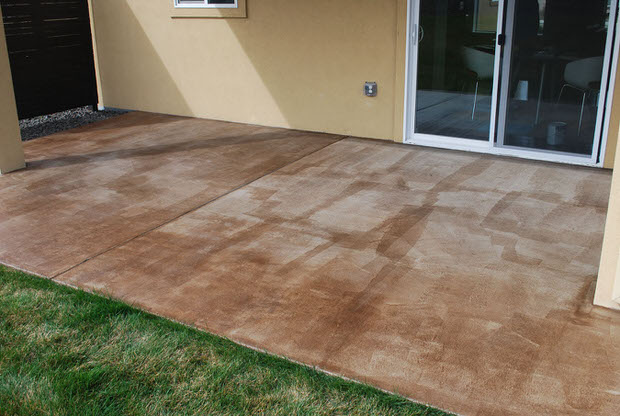
First coat appearance—patience required.
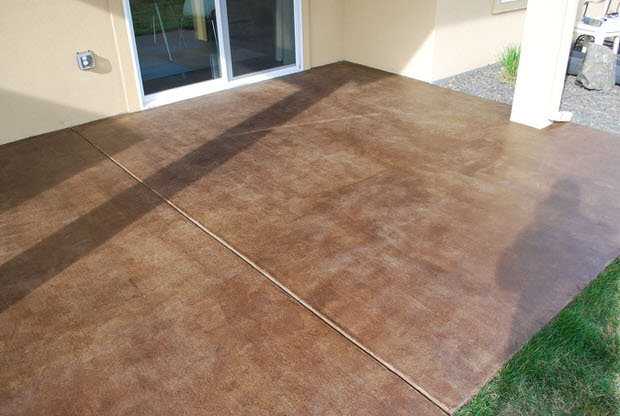
After second coat.
Dry 24 hours. If sealing, apply light roller coats, drying between. Sealer pros: longer life, subtle sheen. Cons: future touch-ups require stripping first.
Works on any concrete, interior or exterior. Holds up well (2+ years in our experience). Touch up chips with brush and paper towel dab. Save the can or record color for future matching.
Installing Porcelain Tiles on a Concrete Patio for a Chessboard Design
How Many Bricks for a 12×30 Patio? A Step-by-Step Calculation
Fixing Sloped Concrete Patio Slab Directing Water Toward Foundation
How to Build a Retaining Wall: Step-by-Step Guide for Landscape Blocks
DIY Log-Slice Garden Steps: Natural Pathway from Tree Branches
DIY Concrete Garden Globes: 4 Recipes, Step-by-Step
DIY Copper Garden Projects: 10 Beautiful Patina-Perfect Ideas
DIY vs. Professional Flagstone Patio Cost in Fort Worth
Stamped Concrete vs. Tile for Entryway Patio: Durability & Cost
Planning the Perfect Garden Patio: Location, Size, and Design
Patio Drainage Systems: Protecting Your Outdoor Investment
Concrete Patio Benefits: Design, Durability, and Value
Build a DIY Outdoor Concrete Table with Cedar Base
DIY Kokedama: Create a Stunning Japanese Moss Ball String Garden
Copyright © www.100flowers.win Botanic Garden All Rights Reserved