


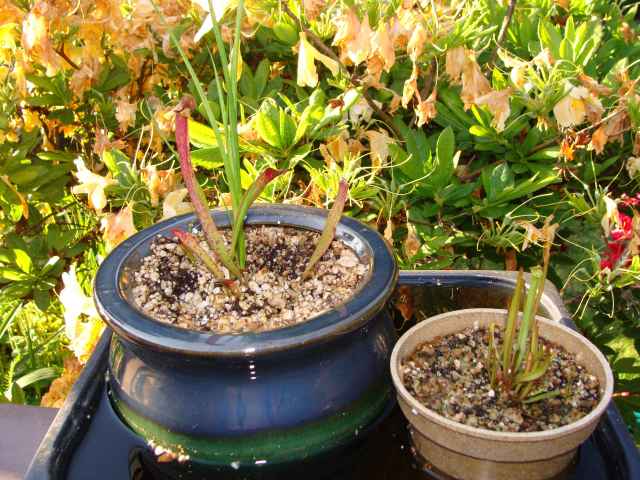
A grower in Vancouver, WA transplanted two pots of Sarracenia (pitcher plants) in March. The plant on the right is growing adequately, but the left plant shows only last year's pitchers—green but likely inactive as traps. Several tall green stems have emerged, some with small flowers, reaching up to 18 inches, yet no new insect-trapping pitchers have appeared. The grower uses a 50/50 perlite and sphagnum peat moss mix with distilled water.
Jeff Dallas of Sarracenia Northwest identifies two primary factors. First, the cool summer has slowed growth across the region—plants in Eagle Creek, OR are also emerging later. Second, the plants may not be receiving enough sunlight. The green coloration of the old pitchers is a classic sign of insufficient light. Additionally, a cool or windy location can further retard development.
Dallas recommends checking the water level: keeping it too deep (halfway up the pot) can cause long-term issues as peat breaks down in hot weather, creating a hostile root environment. A good rule of thumb: "Could I grow a tomato plant in this location?" If not, the spot isn't sunny enough for Sarracenia or Venus flytraps.
The grower clarifies the plants are on a deck railing with full sun. The green pitchers were left because they weren't dead. Water level is halfway up the pots—Dallas advises keeping it no more than 1/4 up the pot long-term to prevent peat breakdown and root oxygen deprivation. This is also why soil must be changed periodically: peat decomposes over time, reducing aeration. While Sarracenia derive some nutrition from peat and its tannins, soil structure changes necessitate repotting; simply adding fertilizer won't suffice.
Regarding flower stalks appearing before pitchers: this is normal for many species, especially S. flava and S. leucophylla. Pitchers will follow.
Good Growing!
Jeff Dallas
Sarracenia Northwest
https://www.cobraplant.com
Saving a Wisteria Damaged by Rabbits and Soil Mites
Caring for New Venus Flytraps Received in November (Orange County, CA)
Quarantining New Houseplants: Spray Thoroughly, Monitor Regularly
Bougainvillea Size Control and Watering in West Florida
Reviving Snow-Damaged Yucca Plants: Will Your Spanish Bayonets Recover?
Yucca Aloifolia Winter Survival: Snow, Rot, and Recovery Strategies
Moving Gift Miniature Roses Outdoors in Western New York: Timing and Care for Zone 5
Yucca Cold Damage: Prune Dead Tops, Protect From Future Freezes
Variegated Snake Plant Division: Winter Timing in Sydney
Caring for Miniature Azaleas Indoors: Water, Light, and Repotting
Reviving a Declining New Guinea Impatiens Indoors
New Guinea Impatiens Not Blooming in Full Shade: Move to Sun
Mystery "Elephant Plant" from Seed: Likely Colocasia or Alocasia
Copyright © www.100flowers.win Botanic Garden All Rights Reserved