

Crepe Myrtle Black Leaves: Aphids and Sooty Mold
Potted Crepe Myrtle in Georgia Covered in Black Black on leaves started 2 weeks ago with blooming. Owner wants to move to ground. Diagnosis If black is sticky, its sooty mold from aphid honeydew. Control aphids and mold

Hibiscus Bud Drop with Cottony Webs: Mealybug Infestation
Cottony webbing at bud bases, unopened buds, and crinkled leaves on hibiscus indicate a mealybug infestation—possibly the pink hibiscus mealybug (Maconellicoccus hirsutus), an invasive species. Mealybug Damage Mealybugs
Pine Trees Browning While Neighbors Stay Green: Site-Specific Stress
Three pines dying amid healthy neighbors points to localized factors—not a regional epidemic. Investigation Checklist Trunk and root flare: Check for mower/string trimmer damage, girdling roots, resin flow (pitch tubes
Meyer Lemon Losing Leaves: Spider Mites and Root Stress
A potted Meyer lemon with yellowing leaves (green veins), leaf drop, deformed new growth, and confirmed spider mites faces dual stress: pest pressure and probable root zone issues. Spider Mite Management Confirm: Tap le
Roses and Privet Dying from Top Down: Investigating Root Causes
Roses dying from the top down, simultaneous with privet decline and mysterious yard holes, suggests a shared underground issue—not pruning tool contamination from 8 months ago. Why Top-Down Dieback Matters Top-down deat
Anthurium Brown Spots and Aerial Roots: Care Guide
Brown spots with yellow halos on anthurium leaves, plus roots growing above soil, indicate cultural issues—not necessarily disease. Leaf Spot Diagnosis The yellow-ringed brown spots suggest bacterial leaf blight (Xantho
Spider Web-Like Cocoon on Live Oak: Need Photo for ID
A spider web-like cocoon engulfing a live oak in South Texas could be several things—each requiring different responses. Possible Causes Fall webworms: Silken tents on branch tips; caterpillars inside; common in TX Ten
Sawdust and Sticky Droplets Under Mimosa: Borer and Aphid Combo
Fine sawdust on your car plus sticky droplets attracting flies under a mimosa tree signals two simultaneous insect issues: wood borers and honeydew-producing insects. Decoding the Evidence Sawdust (frass): Indicates bor
Tiny Spots on Meyer Lemon Fruit: Greasy Spot Fungus
Small spots on Meyer lemon fruit with healthy foliage likely indicate greasy spot (Mycosphaerella citri)—a minor fungal disease thats cosmetic, not destructive. Greasy Spot Characteristics Yellowish-brown to black spec
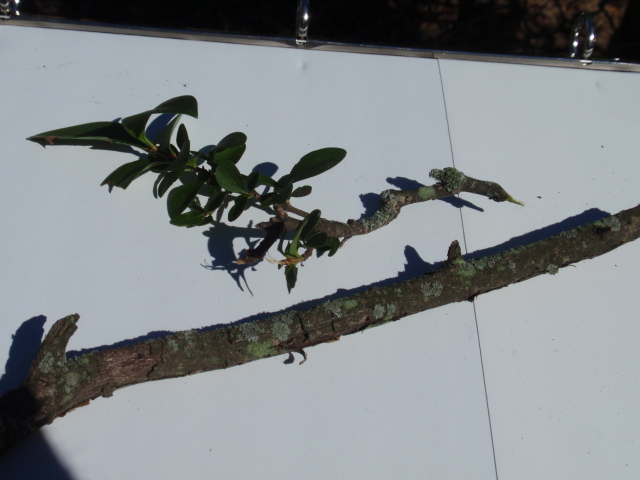
Privet Hedge Decline: Lichens Are a Symptom, Not the Cause
Your 30-year-old privet hedge showing thinning foliage, powdery mildew on leaves, and gray-green patches on stems has multiple issues—but the lichens arent the primary problem. What the Lichens Tell You Lichens (the gra
White Substance on Gardenia: Mealybugs and Cold Hardiness
The white, cottony material on your gardenias leaves and stems is almost certainly mealybugs—a common sap-feeding pest that weakens plants and attracts sooty mold. Mealybug Identification Look for: White, waxy, oval in
Fungus on Fig Tree Trunk: Wood Decay Warning
A dense, firmly attached fungus on your fig trunk with soft wood underneath indicates internal wood decay—a serious structural concern. What Youre Seeing The external fungal growth (likely a conk or bracket fungus) is t
Euonymus Scale: Identification and Control
Rapid dieback in established euonymus with holes in the canopy often signals euonymus scale (Unaspis euonymi)—a serious armored scale pest thats easy to miss until damage is severe. How to Find It Check the undersides o
Young Orange Tree with Dead Limbs and Sap: Scale or Aphids Likely
A newly planted citrus with dead limbs bearing thick, clear sap suggests an insect infestation—likely scale insects or aphids—rather than a disease. Identify the Culprit Scale insects: Small, immobile bumps on stems/le
Sticky White Residue on Mimosa: Aphid Honeydew
The sticky white flakes falling from your 40-year-old mimosa, attracting bees and flies, are classic signs of an aphid infestation—specifically, the honeydew they excrete. Understanding the Problem Aphids pierce leaf an
Stinkhorn Fungi Around Maple: Harmless but Smelly
Those carrot-like fungi popping up around your maple tree and in wood chip mulch are stinkhorns—fascinating, harmless decomposers with a memorable odor. What They Are Stinkhorns are the fruiting bodies of fungi that bre
King Palm Trunk Failure: Root Rot or Borer Damage?
A triple-trunk king palm losing trunks sequentially—first the smallest, now the second—with browning foliage except on new shoots suggests a progressive vascular problem. Diagnostic Clues The shrinking in the middle des
Wisteria Declining After Four Years: Pruning and Care Guide
A wisteria thats slowly died back over months, with branches appearing severed from the main stem, suggests a structural or cultural issue rather than a sudden pathogen attack. Understanding Wisterias Needs Wisteria dem
Powdery Mildew on Tulip Tree: Identification and Management
White, powdery coating on tulip tree leaves is almost certainly powdery mildew—a common fungal disease that looks worse than it usually is. Recognizing Powdery Mildew The characteristic white to light gray powdery growt
Eugenia Shrubs Declining After Planting: Transplant Shock Likely
Twenty Eugenia shrubs planted in mid-June showing dead branches from the center outward, with new growth yellowing and browning, points strongly to transplant shock or root establishment issues—not an infectious disease.
Copyright © www.100flowers.win Botanic Garden All Rights Reserved