


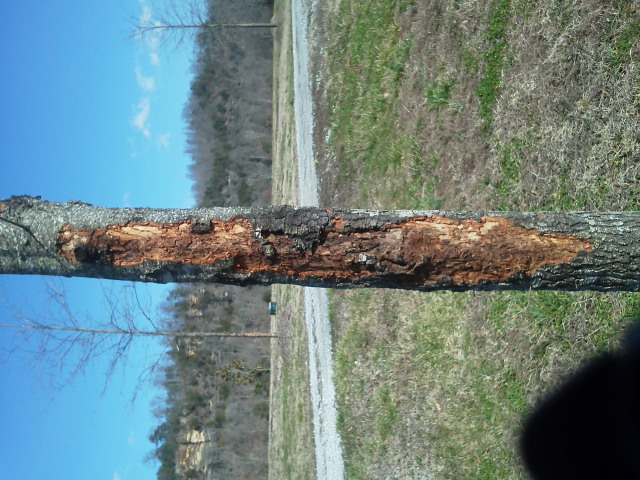
The damage is old, with significant internal decay under lost bark. Deer are unlikely the original cause; they may have rubbed on existing wounds. Decay fungi enter through bark injuries and progress slowly but irreversibly.
The extent of decay warrants tree removal and replacement, especially near structures/power lines. No treatment reverses advanced internal decay.
Poplar Tree Decay: Irreversible Heart Rot and Structural Risk
Ligustrum Trunk Decay: Heart Rot, Not Insects
Maple Storm Damage: Internal Decay, Carpenter Ants, and Structural Risk
Bark Separation on Whitespire Birch: Internal Decay, Not Just Borers
Pruning Storm‑Damaged Arborvitae: Save or Remove the Broken Limb?
Bottle Palm Trunk Damage from Vehicle Impact
Lightning-Struck Trees: Wait and See, Water Deeply, Don't Rush Removal
Lion's Mane Fungus on Willow: Decay Fungus in Hollow Trunk
Common Ash with Cavity: Compartmentalization in Action
Orange Powder on Pine Trunk: Fusiform Rust, Not Lawnmower Damage
Tree Root Damage from Neighbor's Excavation: Risks to Spruce and Foundation
Woodpecker Damage on Oak: What It Means and How to Respond
Copyright © www.100flowers.win Botanic Garden All Rights Reserved