


A maple split by storm winds exposing black, decaying heartwood with carpenter ants has long-standing internal decay—the storm just revealed it.
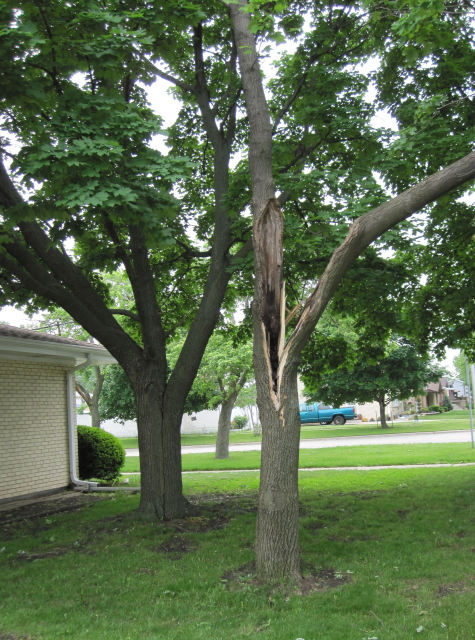
Carpenter ants (Camponotus spp.) nest in decayed wood. They excavate galleries but don't cause the decay. Treating ants doesn't fix the tree.
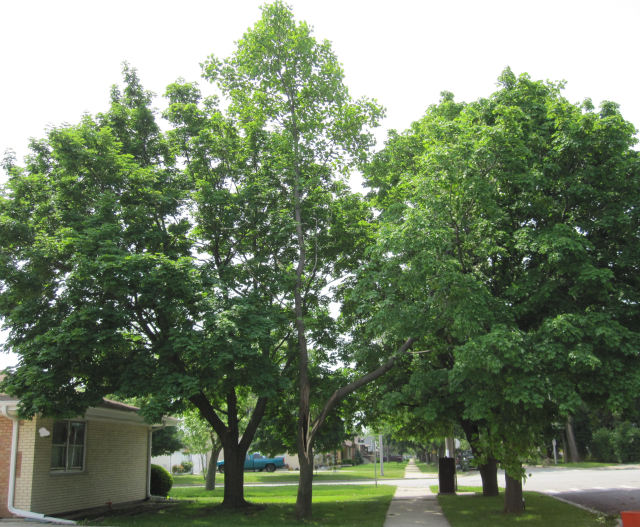
The adjacent maple with a vertical split likely has similar internal decay. Right canopy weight + decay = failure risk. Hire a certified arborist for resistograph/sonic tomography assessment of both trees.
Heartwood decay is silent until the storm. The split was the diagnosis, not the cause.
That "Vine" on Your Maple Is Not a Root—Here's How to Remove It Safely
Maple Sunscald: Wrap, Fertilize, Protect from Borers
Maple Borer Infestation in Old Wound: Treatment and Risk
Saving a Split Maple Tree with Bracing
Diagnosing a Struggling Maple: Split Bark, Black Marks & Fungi
Aphid Honeydew Causing Maple Sap Nuisance
Coral Bark Maple Losing Bark: Sunscald, Borers, or Natural Exfoliation?
Japanese Maple Honeydew and Sooty Mold: Aphid or Scale Infestation
Japanese Maple Scale Infestation: Simple WD-40 and Oil Treatment
Maple Bark Peeling: Decay Fungi and Borer Prevention
Bacterial Wetwood (Slime Flux) in Maple Trees
Japanese Maple Freeze Damage: Spring and Fall Fertilizing
Yellow Fungus on Japanese Maple Branches: Likely Wood Rot, Not Surface Fungus
Choosing the Right Maple Tree for Your Yard: Root Systems and Fall Color
Copyright © www.100flowers.win Botanic Garden All Rights Reserved