


A green ash on a floodplain in Georgia has black, crusty, carbon-like growths at the base. A chunk was removed and did not appear to originate under the bark.
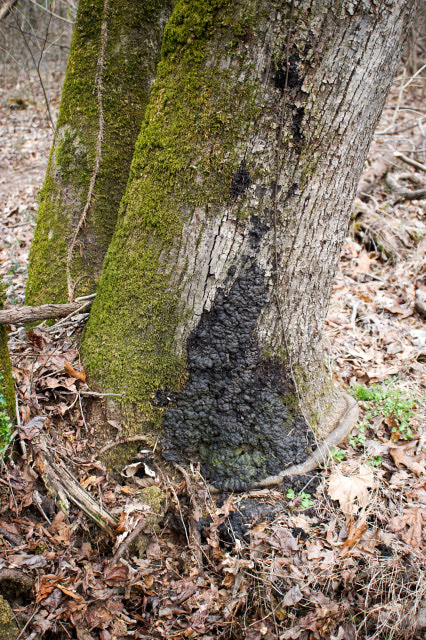
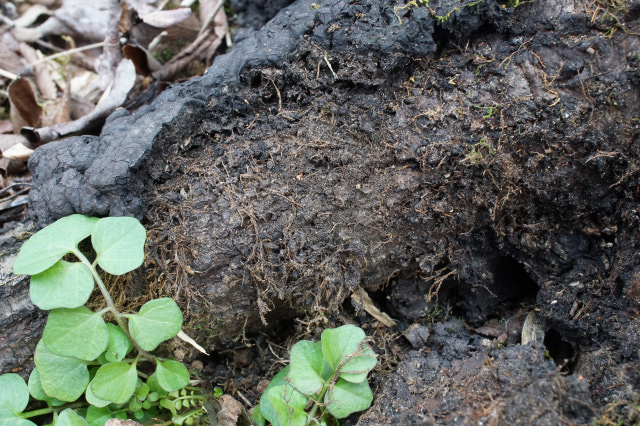
Hypoxylon spp. are secondary invaders that colonize stressed, declining trees. The crusty, black stroma (fruiting bodies) are characteristic.
Many trees persist for years with Hypoxylon, but safety must be the priority.
Mountain Ash Berry Failure and Tip Dieback: Pollination and Twig Borer
Ash Tree Basal Decay: Irreversible Heartwood Rot on West Side
Grey-White Circles on Lilac Trunk: Need Photo for Identification
Oak Tree Bark Sloughing with Gray Fungus After Drought: Hypoxylon Canker—Tree Must Be Removed
Diagnosing Black Dots and Resin on Young Tree Leaves
Bottlebrush Tree Basal Fungal Conk: Fruiting Body Removal Insufficient
Mountain Ash Decline: Dead Man's Fingers Fungus, Suckers, and Replacement Strategy
Bonita Ash Slow to Leaf Out: Normal or Borers?
Ash Tree with Cauliflower Clusters and Peeling Bark: Need Photos
Fungus on Fig Tree Trunk: Wood Decay Warning
Sooty Mold on Foxtail Palms: Caused by Scale or Aphids
Black Knot Management on Ornamental Plum: Pruning and Fungicides
Copyright © www.100flowers.win Botanic Garden All Rights Reserved